RBJJ JOURNAL WHITE BELT STORIES
Trapped: How BJJ Is Helping Me Overcome Claustrophobia
Read the story
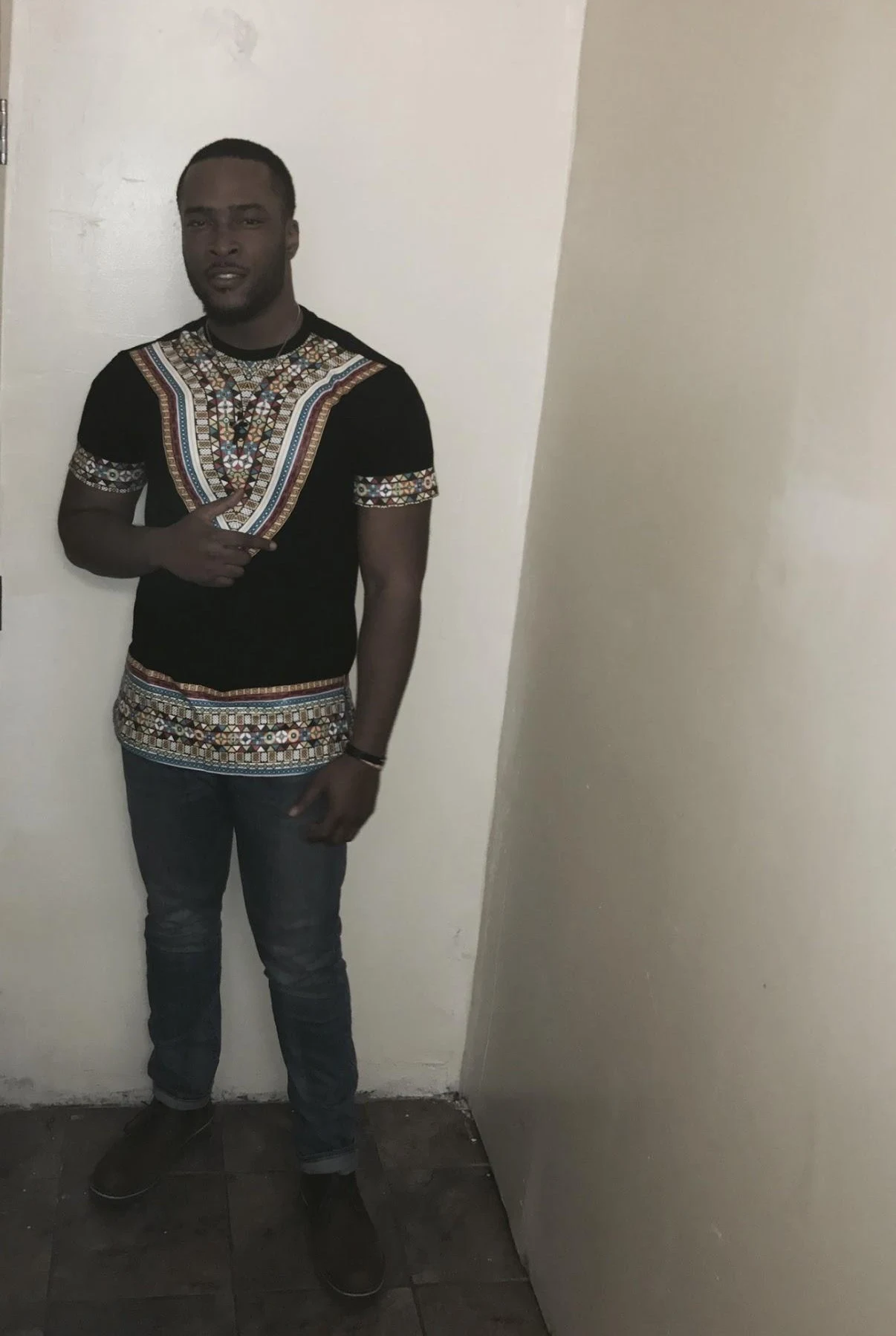
About 10 years ago, I purchased my first Dashiki (Google it). It was in style at the time during my late high school years. It was almost impossible to make it through a school day without seeing one. So, like most teenagers, I wanted one too.
I convinced my mom to make the purchase, and when it finally arrived, it looked exactly the way I expected. But there was one issue. I didn’t know that Dashikis weren’t elastic. Every time I tried it on, I had to squeeze my way in at a certain point. Let’s blame it on my then-muscular shoulders. As the months progressed, my weight progressed as well.
One day, the unimaginable happened.
I went to an event and wore my trusted black and multicolored print Dashiki. The event went well, and I enjoyed myself. It was a night to remember. Unfortunately, the most memorable part of that night wasn’t the event. The most memorable part was what happened when I got home.
I walked into my room and proceeded to take the shirt off. I attempted to lift it over my head, but to no avail. I was stuck. I tried to stay calm. I tried to breathe and remind myself that I could still breathe, so I was okay. I decided to give it one more go. I pulled the shirt up again and managed to get it over my head, but my arms and shoulders were still stuck.
It was at this moment that I learned something about myself that I never knew. I was terrified of tight spaces. In other words, I was claustrophobic.
Was this it? Was this my last moment on Earth? Was I really going to exit the Earth all by myself, in my room, in my parents’ basement?
I chose to live that day.
I mustered up all the strength I had amassed from my few years of protein powder and creatine intake, and I ripped the shirt off. It was a do-or-die moment in my mind, and I chose to do.
Congratulations! You’re the first and only person I’ve told about that experience. I was too embarrassed to share it with my parents.
I wish I could tell you that this was an isolated incident, but it wasn’t.
Some time later, I developed an interest in rock climbing. Not rock climbing myself, but watching climbers on YouTube. That rabbit hole led me to videos about cave divers. The feeling of panic slowly crept in while watching.
Later on, I considered becoming a firefighter until I learned that they have to be comfortable crawling through tight spaces. I immediately changed my mind.
In 2019, I took a trip to Israel to explore the various archaeological sites, and on the final stretch of the journey there, I found myself aboard the smallest plane I had ever boarded.
My dad was with me on the flight. Two large men were expected to fit into a small row that day. And like clockwork, I felt the anxiety and claustrophobia creeping in.
How did I make it through?
I took off my shoes and jacket and tried to get as comfortable as humanly possible. It turned out that my dad was claustrophobic as well, and he insisted that he wasn’t going to take the window seat. So, without much of an option, there I was, in a claustrophobic spot for several hours.
If you’ve made it this far, I know what you’re wondering. Why would someone who spent years avoiding confined spaces suddenly decide to practice Brazilian Jiu-Jitsu?
Well, it’s simple. I had no clue what I was getting myself into, but I’m glad I made the call.
My First Encounter With Side Control
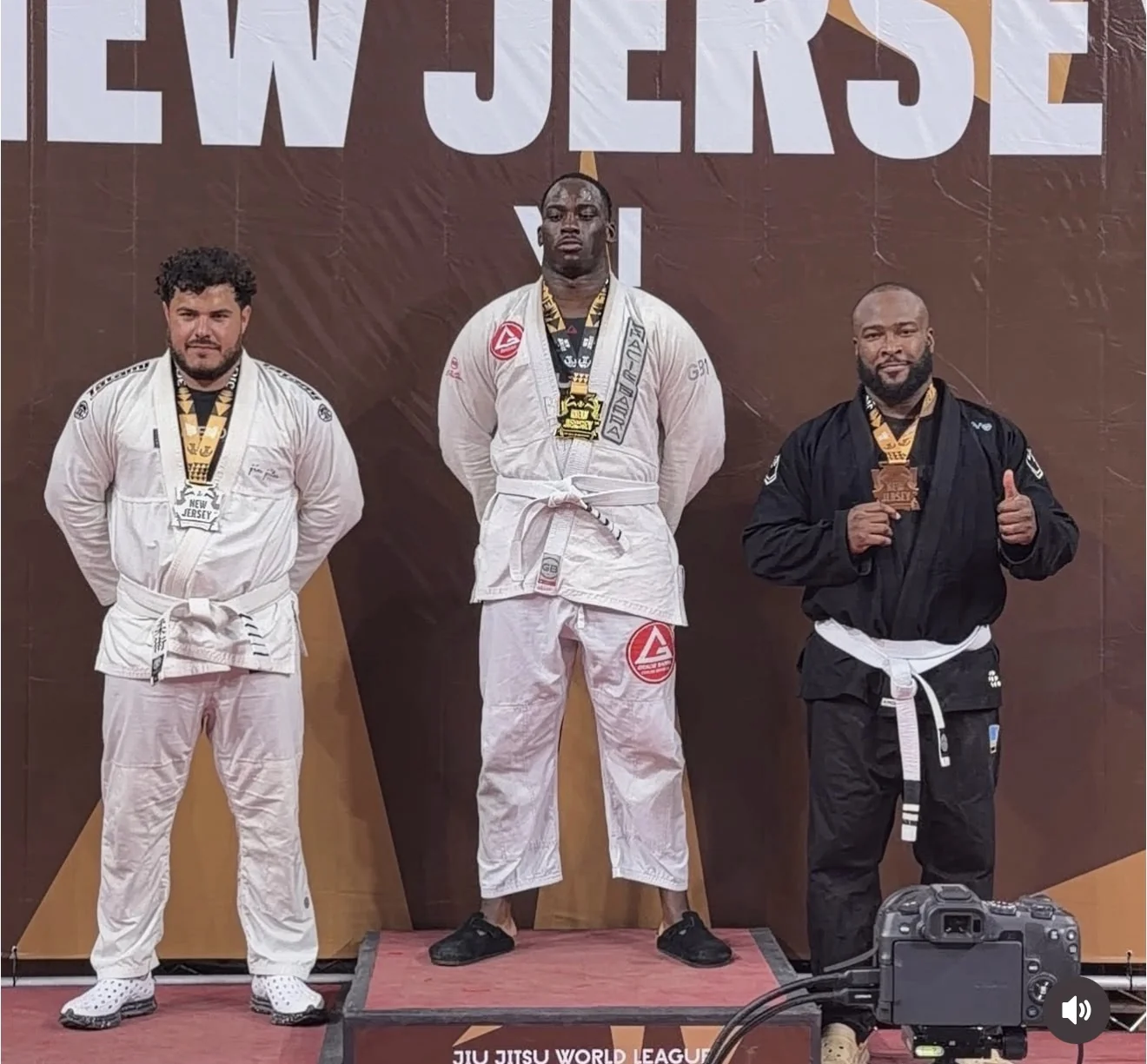
I moved to New Jersey years later, and long story short, I decided to get into BJJ. I learned that there was a gym nearby, and I signed up for a trial class. I got dressed in my loaner gi and belt and was ready for my reality check.
That day, we were practicing maintaining side control and the Americana. It was toward the end of class, and we were practicing the side control position. My training partner allowed me to start on top for a few rounds, and it wasn’t so bad.
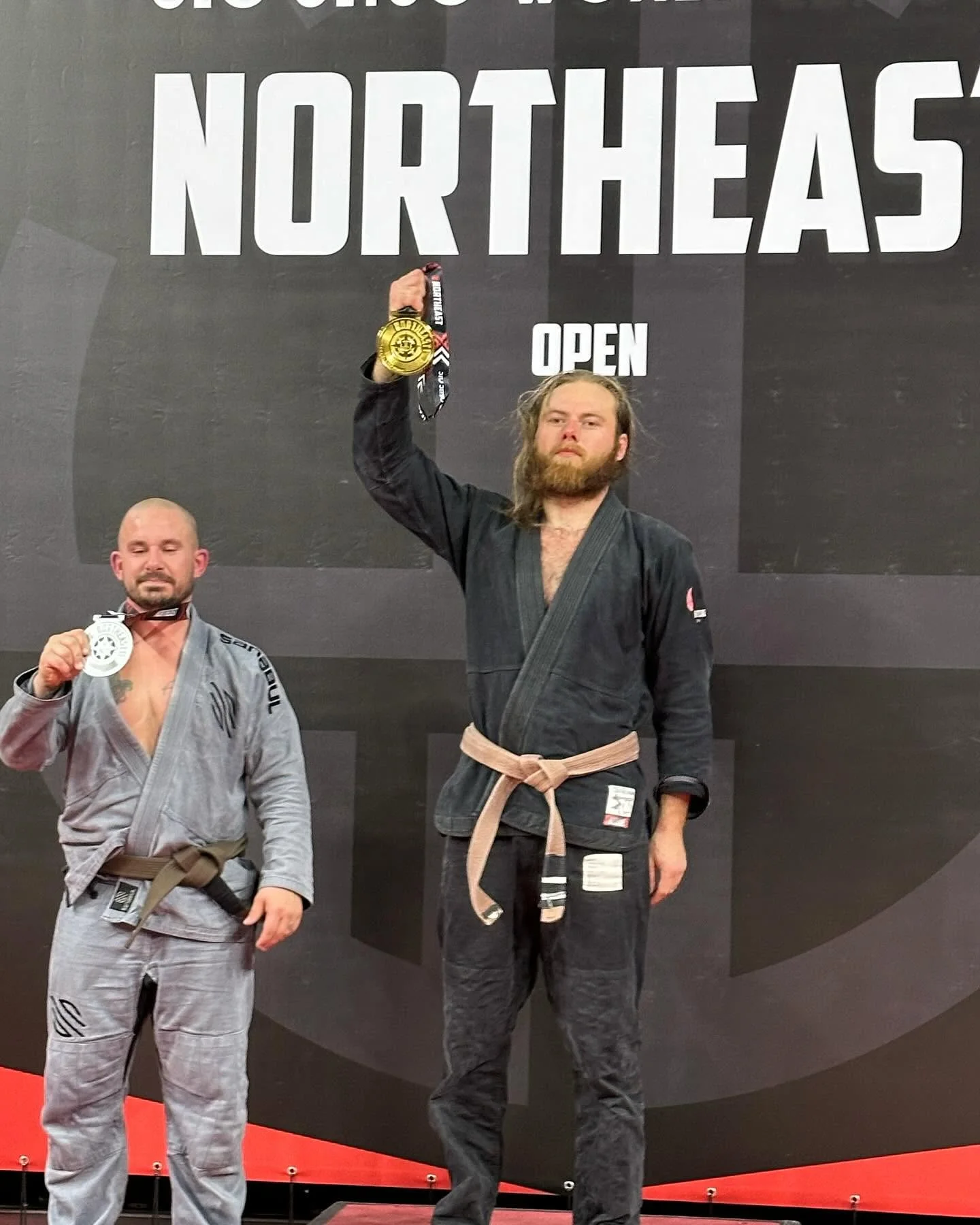
It wasn’t until the instructor, Rich (The Black Belt Viking), asked us to switch that a feeling I had been avoiding for years resurfaced.
My training partner that day was a well-fed purple belt who masterfully never misses a meal. Him and me both.
I lay there on the mat with no clue what a frame was. That man lowered his weight onto me, and all I remember was the lights in the room going dim, barely being able to breathe, and a seemingly immense pressure on my torso.
I immediately tapped.
My training partner was shocked that I tapped so soon, and I explained to him that I just needed a minute to breathe. It was at this moment that I thought to myself, There’s no shame in quitting on day one. Maybe BJJ just isn’t for me.
Unfortunately, I’m not a quitter.
So, I asked the gentleman to try again, and I still tapped quickly, simply because of the pressure. I was afraid. But I had fun. It was a weird and unique mix of emotions. I was terrified yet thrilled, all at the same time.
The Day I Rolled With a Viking
I had thoughts of quitting, but I kept coming back. I kept showing up.
I began to notice that I’ve been fighting for my life to never go to the ground, and if I did, I fought to never get swept.
A few weeks in, I attended a Saturday class. It was led by our instructor, Professor Radji. After class, I stayed for the open mat session. I nervously sat against the wall and tried my best to avoid eye contact with Rich (The Black Belt Viking).
We made eye contact, and without saying a word, he pointed at me and gestured for a roll.
I felt like I was walking to my demise, but I accepted.
He immediately swept me, and he easily took the mount position. He slowly increased the pressure as he leaned forward, and there it was.
The claustrophobia.
I tapped.
With a look of confusion, he asked why I tapped, and I shared that I felt like I couldn’t breathe. It was in that moment that I gained a whole lot of respect for him. Instead of just continuing the round to crush me, he decided to teach me.
He taught me how to escape the mount position and the importance of the elbow-knee connection. After a few reps of that escape, my confidence under pressure improved slightly, but I wasn’t out of the woods yet.
Five Lessons That Are Helping Me Overcome Claustrophobia
As the months progressed, I continued to experience claustrophobia. What changed was that I was getting better at managing it.
What’s great about our school is that we don’t only learn from our professor, Radji. There’s a culture where we learn from our training partners as well. As a white belt, I learn something new from everyone I roll with.
In this section, I’d like to share five lessons I’ve learned that have helped me overcome the terror of claustrophobia on the mats.
Lesson One: Keep Showing Up
One of the first lessons I learned from Professor Radji is the importance of consistency and time on the mat.
When I started, I had a level of confidence that, because of my size and strength, I’d at least be decent.
Boy, was I wrong.
The humbling came quickly, and I’m glad for it. I learned that the more time I spent on the mats, the more familiar everything became. What once felt like uncharted territory gradually became a place where I felt comfortable and at home.
As I’m writing this, I remember that just nine months ago, I could barely touch my toes, do 10 push-ups, do one pull-up, walk up steps without being out of breath, escape a rear-naked choke, do a shrimp, shoulder roll, etc.
And now, due to consistency, just showing up, and putting in the work on the mat, I can do all of the above with ease.
And I lost a whopping 30 pounds in the process.
Lesson Two: Trust Your Training Partners
During my early episodes of claustrophobia on the mats, I had an irrational fear that I would get hurt or knocked out.
This feeling soon faded as I developed better rapport with my training partners. I’ve been in countless vulnerable spots with them. If they wanted to, they could have broken my arms, ankles, knees, neck, ribs, etc.
But they always understood that we’re responsible for each other’s safety, and they always respect the tap.
As I began trusting my training partners more, it became easier to stay calm under pressure. I quickly recognized that I was training in a controlled environment with people who were there to help each other improve.
Lesson Three: BREATHE
I learned this lesson from our resident purple belt and philosopher, Eli.
Not only did he teach me my favorite guard, Collar-Sleeve, but he also taught me how to breathe. Well, I always knew how to breathe, of course, but he showed me how to do it with intention and efficiency. Instead of muscling my way out of every tough spot, I learned I could breathe through pressure and wait for a gap to open during a transition.
I desperately needed that lesson. To avoid getting stuck under pressure, I used to dump every ounce of strength into escaping right away, and like clockwork, I was gassed in under sixty seconds. What followed was the worst feeling on the mats: rolling for what felt like an eternity, only to look up and see five minutes still left on the clock. Surviving a full round meant changing how I breathed.
My problem wasn’t a lack of air; it was bringing powerlifting habits onto the mats. In powerlifting, you inhale as you lower the weight, brace your core, and exhale as you drive up. On a bench press, that looks like inhaling on the way down, bracing tight, and holding your breath for a split second before pushing back up and breathing out.
That works great under a barbell, but it drains your tank fast in BJJ.
Instead of treating every second as an all-out sprint, I started using moments inside the roll to reset and catch my breath. When I secure a dominant position or lock in my guard, I don’t have to rush the next transition. I can pause, breathe, and recover right there.
The breathing techniques I’ve learned (and am still learning) have led to noticeable improvement, not only during the rolls but even during the recovery window between rolls as well.
Lesson Four: Become Comfortable Being Uncomfortable
As I mentioned in the last section, I usually avoided ending up under my opponent’s pressure like the plague.
I survived a few rounds using that strategy, but was I really learning BJJ, or was I just surviving and not engaging until the time ran out?
It was mostly the latter.
I’ve been learning this lesson from almost all the upper belts I’ve rolled with: intentionally put yourself in unfavorable spots and practice fighting from there.
I’m still learning this.
I try to go into rolls with the intention of ending up on my back at some point to practice escapes, and at times, just resting there for a bit, focusing on my breathing, and staying calm.
What also helps is knowing that I can tap at any time if I feel like the pressure is a bit too much.
P.S. Tap early and often.
Lesson Five: Trust Your Frames and Your Training
I’m especially grateful for the countless lessons I’ve received about the importance of frames.
Prior to starting BJJ, I mainly trained in powerlifting. I never had the opportunity to compete, but that was a style of training I adopted from my uncle, who was an actual powerlifter.
With that background, I found myself trying to bench press my opponents off of me, and as you could imagine, it didn’t go too well.
The concept of frames as a shield was huge for me. I realized that my body came equipped with a few shields that, if positioned correctly, could help me persevere through the feelings of claustrophobia, and sometimes avoid it entirely.
The frames even allowed me to buy some time to catch my breath, reassess the situation, and rethink my strategy for the roll moving forward.
Conclusion: Am I Still Claustrophobic?
Am I still claustrophobic?
Absolutely.
But the difference between the man who ripped a Dashiki off his body in a basement and the man who willingly steps onto the mats every week is that I’ve learned that feeling trapped and actually being trapped aren’t always the same thing.
Sometimes there’s an escape I haven’t discovered yet. Sometimes I need to breathe, create a frame, and find my way out. And sometimes, I simply need to tap.
I’m still a white belt, and I’m still learning. But every time I step onto those mats, I’m learning that fear doesn’t have to control me.
I’ve learned, both on and off the mats, that courage isn’t the absence of fear, but it’s the ability to stare fear in the face and say:
ONE MORE ROLL!