If you have been researching jiu-jitsu schools, you have probably encountered several names: Brazilian Jiu-Jitsu, BJJ, Gracie Jiu-Jitsu, and individual academies named after their instructors. It is reasonable to wonder whether these are different martial arts, different teaching systems, or simply different names.
The most useful answer is that these labels overlap, but they do not tell you everything about a school. Understanding the history helps. Understanding what an academy actually teaches helps even more.
Where the Gracie family fits into jiu-jitsu history
Brazilian Jiu-Jitsu has roots in Japanese jujutsu and Kodokan judo; its history did not begin with the Gracie family. The Gracies played a major role in developing and promoting the Brazilian approach that became internationally known as BJJ.
That distinction gives the family appropriate credit without reducing the entire history to one surname. Japanese teachers, Brazilian practitioners, and later generations of competitors and instructors all belong in the story.
For someone choosing a school today, the useful question is not whether the Gracie family mattered. It is what a particular school’s connection to that history tells you about the instruction you will receive.
Is Gracie Jiu-Jitsu different from Brazilian Jiu-Jitsu?
“Gracie Jiu-Jitsu” can refer to a particular organization’s teaching system, not just a historical connection to the family. For example, Gracie University operates defined curricula and authorizes Certified Training Centers to teach its programs.
That does not make one organization’s curriculum a description of every school with “Gracie” in its name. When comparing academies, ask which organization, instructor, and program the name refers to.
Three separate questions will give you a clearer picture:
- Lineage: Who taught the instructor, and who taught that instructor?
- Affiliation: Does the academy currently belong to or hold authorization from a particular organization?
- Curriculum: What will students actually learn, and how will they practice it?
Treating those questions separately avoids a common misunderstanding: a historical teaching connection is not the same thing as a current organizational relationship.
Is Gracie Jiu-Jitsu for self-defense and BJJ only for competition?
That is too broad a distinction to use when choosing a school. A better approach is to ask an academy to explain its actual priorities rather than assuming the name supplies the answer.
If self-defense is your main concern, ask how the curriculum addresses that goal. If you want to compete, ask how competition preparation works. If you want a challenging activity without entering tournaments, explain that too.
You can also ask how beginners move from learning a technique to practicing it with a partner. The instructor’s explanation should help you understand the training, not leave you relying on a label.
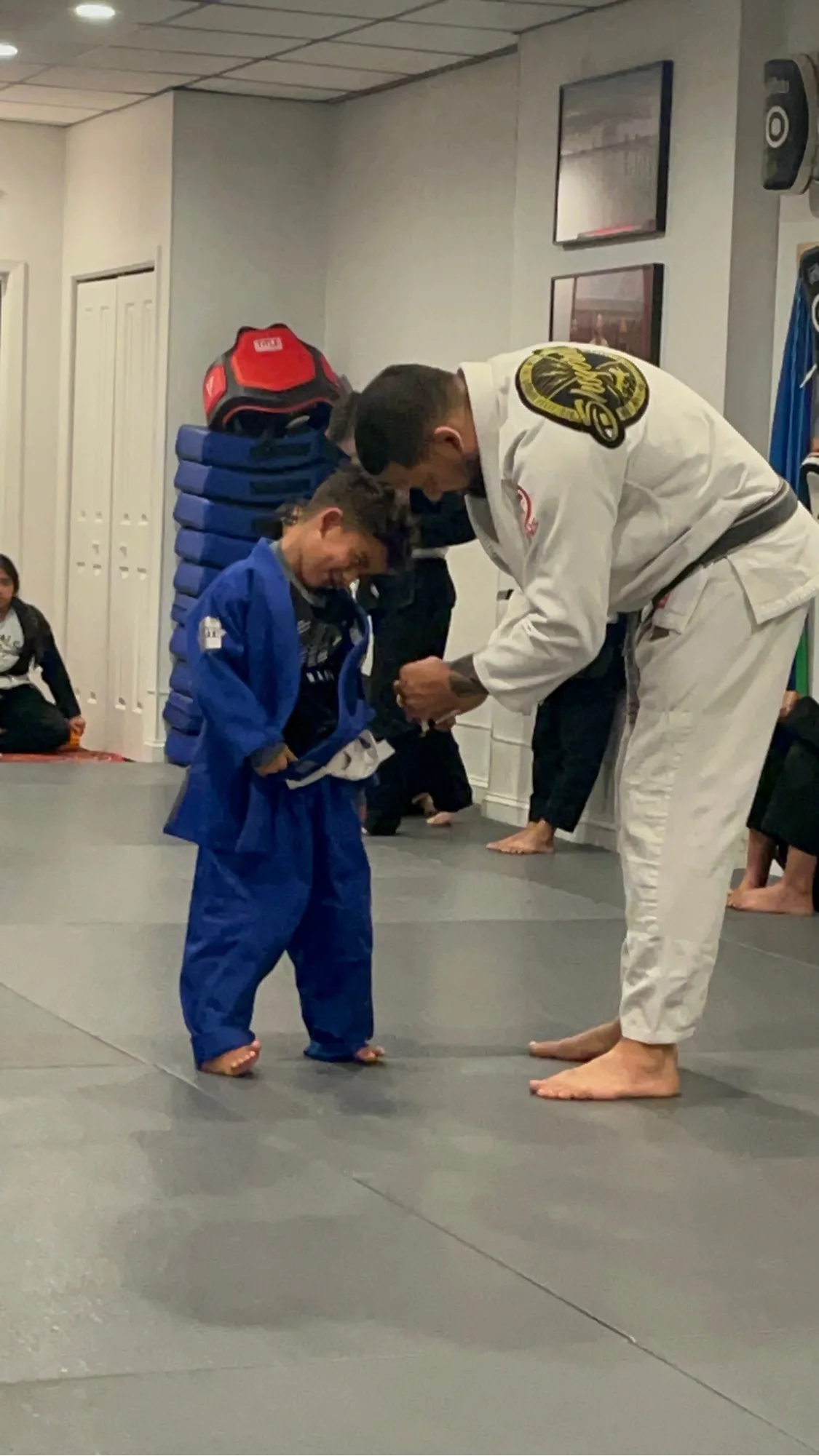
For parents, this becomes especially practical. Ask how instruction is adapted for children, how partner practice is supervised, and how coaches respond when a child is uncomfortable or frustrated.
How jiu-jitsu continued to evolve
The development of Brazilian Jiu-Jitsu did not stop with its earlier generations. Later practitioners built influential approaches within the art, including distinctive technical games and methods of instruction.
Eddie Bravo and 10th Planet
Eddie Bravo founded 10th Planet Jiu Jitsu in 2003 as a no-gi school in West Hollywood, California. His example belongs in this discussion because it shows why a comparison should look beyond names.
A prospective student can ask about the actual training format and approach instead of assuming all jiu-jitsu academies offer the same experience. Our Gi versus No-Gi guide explains the clothing and grip differences.
Marcelo Garcia and an influential technical game
Marcelo Garcia helped shape modern attacking jiu-jitsu through his use of butterfly guard, X-guard, arm drags, back attacks, and chokes. For a beginner, memorizing those techniques is not the point.
The important takeaway is that an individual practitioner can develop an influential approach within the broader art without that approach becoming an entirely separate martial art.
John Danaher and systematic instruction
John Danaher is known for organizing jiu-jitsu instruction around connected positional and submission systems rather than treating techniques as isolated movements. That offers another useful distinction when evaluating an academy: what someone teaches and how they teach it are both worth understanding.
Ask an instructor how the lessons connect and how a beginner is expected to progress. Respect for earlier teachers and continued development do not have to compete with one another.
Where Professor Radji Barrett’s lineage fits
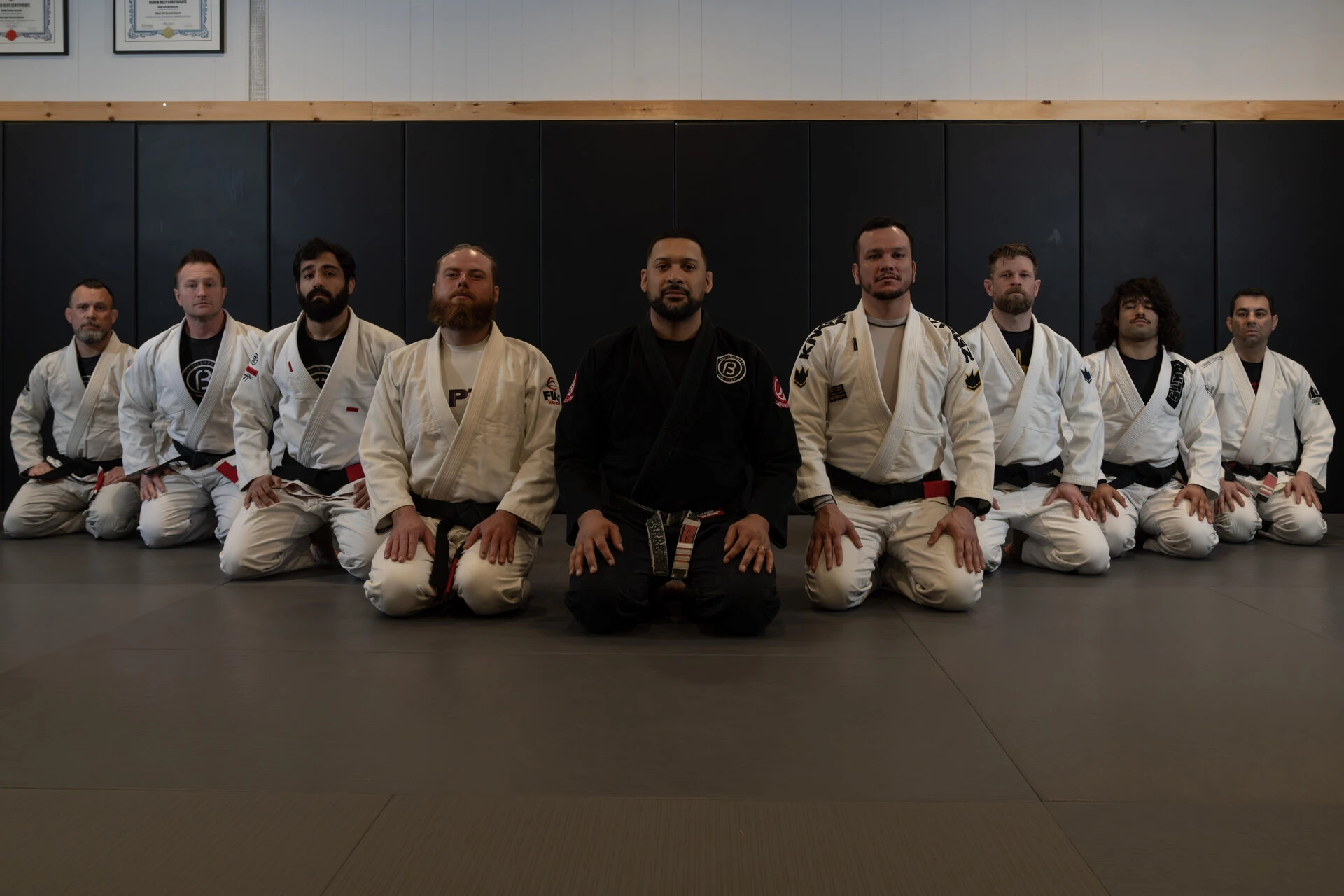
Professor Radji Bryson-Barrett earned his Brazilian Jiu-Jitsu black belt under Ailson “Jucão” Brites. Jucão’s published lineage runs through Carlos Gracie Jr., connecting Radji’s instruction to that teaching ancestry.
At Radji Barrett Jiu-Jitsu Academy, we recognize that connection while identifying ourselves accurately as an independent academy. We are not presenting teaching lineage as a claim that RBJJ is an authorized Gracie University school or another Gracie-branded affiliate.
There is also independent documentation of Radji’s historical team connection: official IBJJF results list him competing as a black belt for Team Jucão USA. You can learn more about Professor Radji’s background and approach here on our website.
We believe lineage is worth explaining because students deserve a clear account of an instructor’s background. We also encourage students to evaluate the instruction itself rather than treating ancestry as the only consideration.
What matters when choosing a jiu-jitsu school?
Whether you are considering a Gracie-named academy or an independent Brazilian Jiu-Jitsu school, bring the same practical questions. The answers should help you understand the experience you are considering.
- Your goals: Does the instruction fit what you want to learn?
- Beginner support: How are students introduced to unfamiliar movements and partner practice?
- Coaching: Can the instructor explain the purpose of a technique clearly?
- Supervision: How are training partners, intensity, and experience differences managed?
- Expectations: What are the schedule, costs, equipment needs, and membership terms?
- Your experience: Do you feel comfortable asking questions and discussing limitations?
For children, add one more question: does the coach take the time to understand the child in front of them? These questions remain useful regardless of which academy you eventually choose.
A recognizable name may prompt you to investigate a school, but the answers should help you decide whether to train there. You do not need to arrive knowing the history of every belt or organization to ask thoughtful questions.
Common questions
Does a Gracie lineage mean a school is Gracie-affiliated?
Do not assume that it does. Ask separately about the instructor’s lineage and the academy’s current affiliation; Gracie University, for example, maintains its own authorization and endorsement requirements for Certified Training Centers.
Should beginners choose a school based on lineage?
Use lineage as one part of your evaluation, not the entire decision. Ask about instruction, beginner progression, training expectations, and whether the environment fits your goals.
What should I ask if I mainly want self-defense?
Ask the instructor how the curriculum addresses your concerns and how students practice those skills. Avoid assuming that either “Gracie” or “Brazilian Jiu-Jitsu” automatically answers that question.
Understanding the history, then experiencing the teaching
At RBJJ, our invitation is simple: understand our background, ask your questions, and see the instruction for yourself. You should not have to choose an academy based on a surname alone.
Our academy is at 540 New Brunswick Ave, Fords, NJ 08863, in Woodbridge Township, with programs for children and adults and a free first class. If you are comparing jiu-jitsu schools around Fords, Woodbridge, or Edison, explore our kids’ program or adult program, then decide whether the training matches what you are looking for.
Get to know the training
Explore our classes in Fords, ask your questions, and decide whether the academy fits what you want to learn.
Explore Your First Class