
Striking Martial Arts vs. Jiu-Jitsu for Kids: What Parents Should Know

9 min read
Choosing a martial art for your child can feel confusing before you even walk into a school. You hear about confidence, discipline and self-defense, but those words do not tell you much about what your child will actually experience in class.
At Radji Barrett Jiu-Jitsu Academy, we encourage parents to start with a simpler question: what do you want your child to learn, and what kind of environment will help them learn it? Practical self-defense may be a priority, but so may finding an activity where your child feels respected and wants to keep showing up.
Striking vs. grappling: the practical difference
Striking-based arts: karate and Taekwondo
For this comparison, we group karate and Taekwondo together because both emphasize striking. They are distinct martial arts, not interchangeable names: karate generally emphasizes hand strikes, while Taekwondo places more emphasis on kicks. (American Academy of Pediatrics)
A useful question for parents is how a school teaches distance, control and contact. Ask when children begin partner practice, which targets are allowed and how instructors supervise it. The actual class matters more than assuming every striking school teaches the same way.
Brazilian Jiu-Jitsu: grappling and physical control
BJJ focuses on grappling: working with another person’s balance, position and physical control. Its sport rules recognize takedowns, positional control and submissions rather than a striking-based scoring system. (IBJJF rules resources)
For a parent, that means asking how children learn to respond to being held or ending up on the ground. Ask how close contact is introduced, how partners are matched and how children learn to stop practice. Grappling is a different emphasis, not a guarantee of safety or self-defense success.
The short version: striking-based arts emphasize punches and kicks; jiu-jitsu emphasizes grappling and position. Neither label tells you everything about the instructor, the curriculum or whether your child will feel comfortable.
One family’s experience, not a verdict on Taekwondo
Our kids’ coach Angel Ortiz first enrolled his oldest daughter in Taekwondo, where she trained for approximately two years. He appreciated the discipline and confidence she developed, while wanting to understand how the training addressed grabbing, being held or being taken to the ground.
“I signed her up for self-defense.”
Angel Ortiz
Those were concerns he had as a parent, not descriptions of an incident involving his daughter. His experience at one school is not a judgment about every Taekwondo instructor.
Angel discovered our academy at its former Edison location. Watching partner practice and controlled resistance helped him see how positioning and leverage worked; eventually he began training too, and both daughters now train. You can read Angel’s personal account of choosing martial arts for his children for the full story.
What Brazilian Jiu-Jitsu offers a family to explore
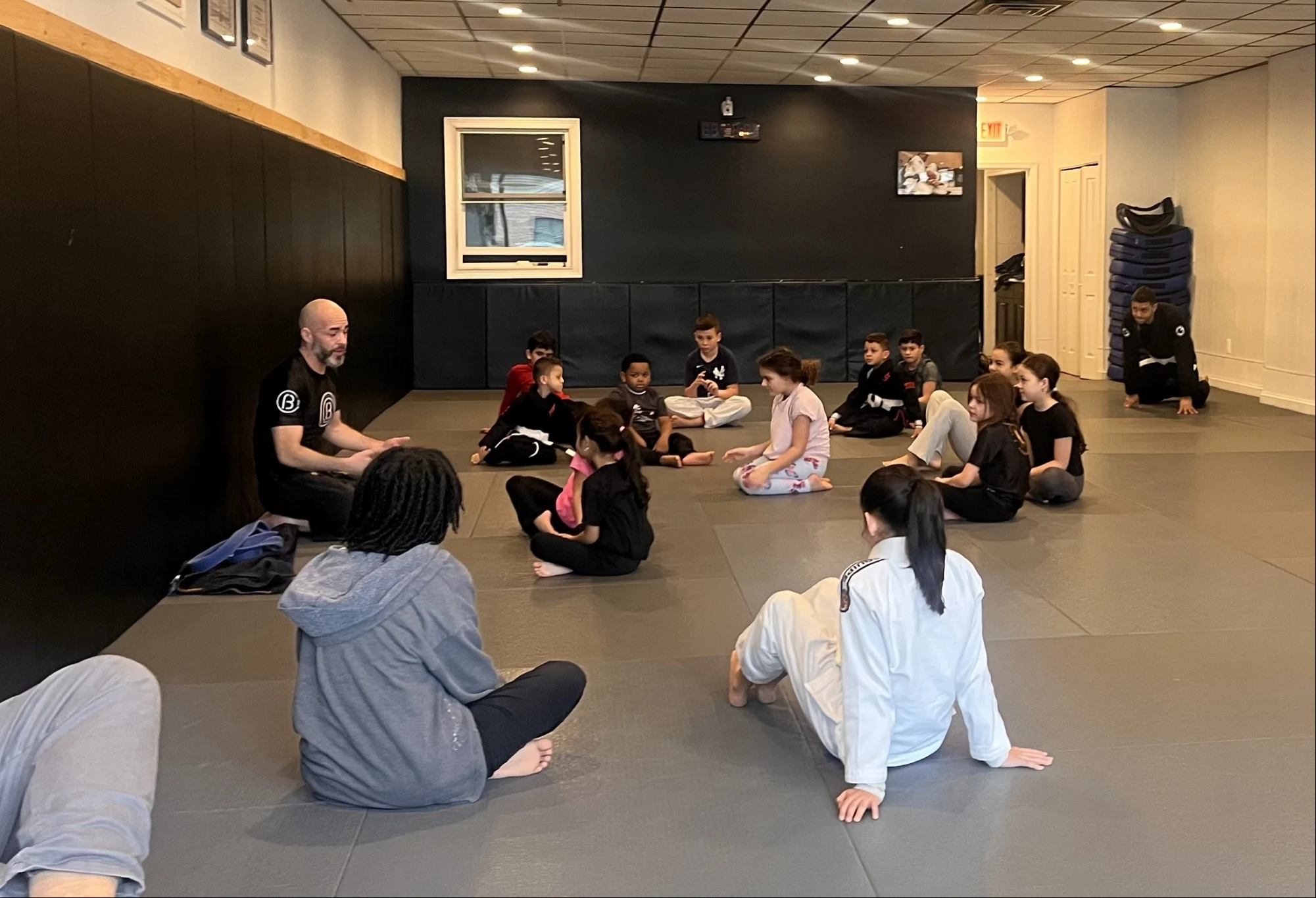
BJJ gives parents a different set of training questions to explore: how does a child learn about balance, understand a difficult position or respond when another person holds them? We encourage you to ask how those ideas are introduced, practiced with a partner and developed over time.
Karate and Taekwondo also have sparring formats; practicing against another person is not exclusive to BJJ. (Olympics.com’s karate overview, Taekwondo guide) The distinction is the grappling emphasis, not a claim that only one martial art involves realistic effort.
Professor Radji also trained in Taekwondo before pursuing Brazilian Jiu-Jitsu and chose to continue with BJJ because of the benefits he found. We respect that different families may reach different conclusions, depending on their goals and the instruction available to them.
What to look for in children’s partner practice
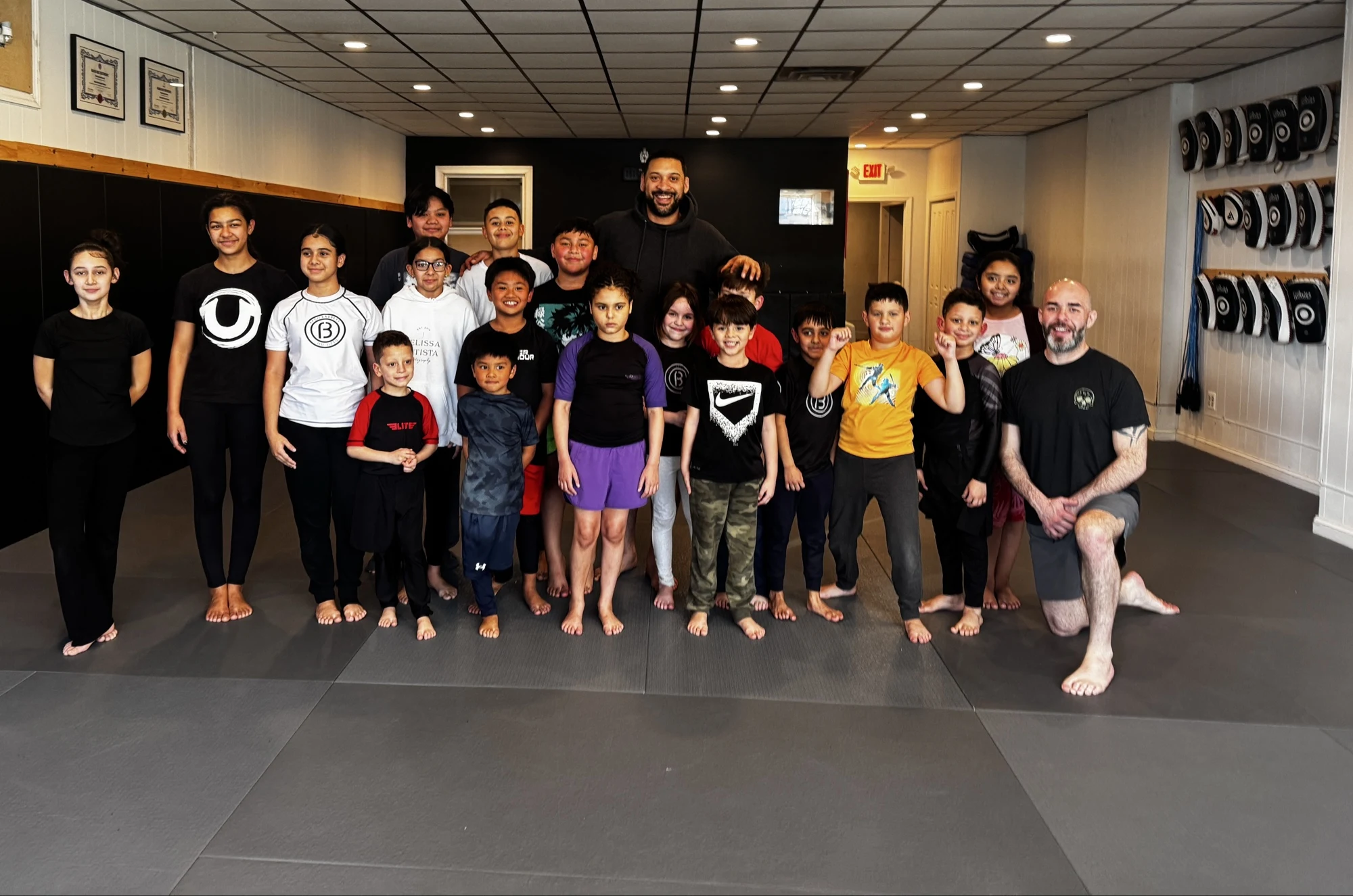
Look beyond whether a child can repeat a movement. Pay attention to what happens when the movement becomes difficult, because that is when the teaching approach becomes especially visible.
Can the child ask a question? Does the instructor notice when a partner is confused or uncomfortable? Is there room to slow down and learn?
In BJJ, ask how beginners are introduced to close contact, how partners are matched and how children learn to stop immediately when instructed. In a striking class, ask equally direct questions about contact levels, permitted targets and supervision.
The American Academy of Pediatrics recommends supervised skill development before progressing into sparring or contact. (AAP martial arts guidance) That makes the instructor’s approach to progression an important part of the decision.
Which martial art might suit your child?
We would be cautious about matching a child to a discipline based on one label: shy, energetic, athletic or nervous. Watching how that particular child responds to that particular instructor is more useful than relying on a personality shortcut.
- A child who is shy: Watch how the instructor welcomes them. Look for encouragement without making the child the center of attention before they are comfortable.
- A child with plenty of energy: Look for clear expectations and purposeful activity. Simply making a class more intense does not necessarily make it more suitable.
- A child nervous about contact: Ask to observe how contact is introduced. No particular discipline is guaranteed to feel comfortable immediately.
- A child interested in competition: Ask how competitors are prepared and how coaches respond to losses. Ask whether children who do not compete receive the same care.
- A family focused on self-defense: Ask what the curriculum covers and what it does not. An honest answer is more useful than a promise that training prepares a child for everything.
Consider whether the schedule works for your family, too. A program your child enjoys and can attend consistently is more useful than an impressive-sounding option you cannot realistically maintain.
Questions to ask any martial arts school
You do not need martial arts experience to ask useful questions. You are trying to understand how the school teaches children, not test the instructor’s vocabulary.
- Teaching experienceWhat experience do you have working with children at this stage of development?
- Beginner supportWhat happens during the first few classes?
- GroupingHow do you consider age, size, experience and maturity?
- SupervisionHow do instructors monitor partner practice and intervene when needed?
- ContactWhen does sparring or live practice begin, and what rules apply?
- FrustrationWhat happens when a child becomes upset, distracted or reluctant to participate?
- SafetyWhat are the procedures for injuries, cleanliness and stopping practice?
- ExpectationsWhat are the tuition, equipment costs, attendance expectations and competition policies?
- ObservationCan I watch a class and see how my child is settling in?
Then watch whether the answers match what you see. Pay particular attention to how an instructor treats a child who is struggling, not only the children who perform well.
- 01Know your goals
- 02Ask to observe
- 03Ask your questions
- 04Listen to your child
Frequently asked questions
At what age can children start Jiu-Jitsu?
Consider readiness alongside age, including whether a child can follow instructions and participate in the particular class. Children develop at different rates, so chronological age alone does not settle the question. (AAP guidance on sports readiness)
At RBJJ, our approximate groups are ages 5–9 and ages 9–13+, with flexibility around size, maturity and experience. Those ranges are guides rather than hard cutoffs; our kids’ program page explains the current approach.
Is Brazilian Jiu-Jitsu safe for children?
No contact martial art is risk-free. The AAP explains that injury risk depends on the type and level of participation, with contact introducing additional injury risks. (AAP martial arts guidance)
Ask about supervision and progression rather than accepting “it’s safe” as the complete answer. If your child has an injury or health concern, discuss participation with their pediatrician.
How does Jiu-Jitsu compare with striking arts for self-defense?
BJJ’s grappling emphasis makes it worth exploring when your questions involve grabbing, holding and ground situations. That focus does not establish that it is better for every child or every situation.
Compare the actual teaching, including escape, boundaries and judgment. Be wary of any school promising that a child will become impossible to hurt or control.
Will martial arts make my child more aggressive?
A martial art does not promise a particular behavioral outcome. Watch what the instructor rewards: control and respect, or overpowering another child.
Ask how misuse of techniques is addressed. Learning when not to use a physical skill belongs in the conversation.
How often should my child train, and must they compete?
Start with a schedule your family can sustain and discuss it with the instructor. At RBJJ, competition is optional, not a requirement of the kids’ program.
A child’s training should not be judged only by tournament results. Notice how they participate, learn and respond to challenges, too.
What should we expect at the first class?
At RBJJ, the first-class guide describes movement drills, a technique demonstration, partner drilling and jiu-jitsu-based games. It also explains clothing and what to bring, so you do not have to guess.
Treat that visit as a chance to observe and ask questions. It does not need to become a commitment before your family understands the environment.
Choose the environment, not just the martial art
We teach Brazilian Jiu-Jitsu because we value the discipline and its approach to training. Your family’s choice should come from understanding your goals, watching the instruction and listening to your child, whether you choose BJJ or another martial art.
Our academy was previously located in Edison and is now at 540 New Brunswick Ave, Fords, NJ 08863, within Woodbridge Township. Families considering us from Edison and nearby communities can find the current address and contact information on our location page.
If you would like to see our approach, you are welcome to try a class. We hope you leave with a clearer understanding of the training and whether it feels right for your child.