
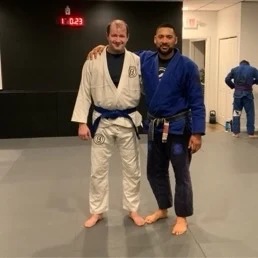
My background
Martial arts has been part of the conversation since kindergarten, when we argued who would win: Jean-Claude Van Damme or Arnold Schwarzenegger? Karate or kickboxing or jiu-jitsu? Nobody gave jiu-jitsu a chance back then, and it didn’t even have the Brazilian prefix. Looking back, I’m amazed it was mentioned at all.
It wasn’t until my late teens and early twenties that I really got hooked, watching early PRIDE fights on bootleg DVDs, being in awe as Bob Sapp’s brute force was defeated by Minotauro’s relentless technique, later the Matt Hughes–GSP saga, and then so many other displays of resilience and redemption.
I remain a dedicated spectator of the various martial arts, over time developing a particular appreciation for the more calculated, less concussive grappling versions. Sumo and arm wrestling are pretty cool, too.
Initial forays
When I turned 30, I experienced an unusual bout of depression, and ultimately realized I needed a new hobby or two. One experiment I conducted consisted of a few BJJ trial classes in Manhattan, where I lived at the time, including one at Renzo’s academy, where the pace was too hardcore for me, and one with Team Jucao, which felt kinda too small at the time at the Columbus Circle location.
Eventually I settled on the Marcelo Garcia Academy, where I felt a balance of world-class instruction (Bernardo Faria! Marcelo himself!) as well as a welcoming atmosphere for non-competitors, and I trained there for about 11 months.
After a job move, I told people the commute was too far. The real reason I quit was that the continued training was too hard and I was too weak to continue, especially mentally.
A few years and moves later, in Astoria, I trained another 11 months at Eduardo Santos’ Gentle Arts Studio, also known as Lotus Club. When they relocated, I used the move as an excuse again. The real reason was the same: frustration at not being able to deal with basic things like a knee shield, and not being able to handle the physical and mental demands of continuous training.
I even got to visit a Brazilian jiu-jitsu academy in Torrance, California, but looking back I realize I did not yet have the spirit or desire for long-term training.
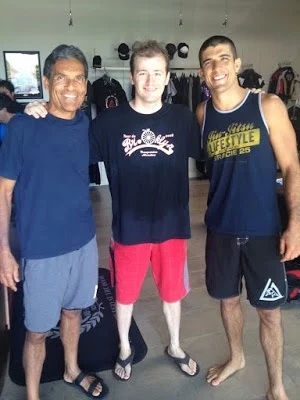
Radji’s
In 2022, after having my first child and moving out of the city, I realized that if I’m to lead my family by example I needed to develop a higher level of discipline. That’s when I signed up at Radji’s, as a dilapidated 38-year-old.
By then the difference in my body from a decade earlier was becoming obvious faster and faster. Light asymmetric loads, such as helping carry a cooler or just bending down to lift something, would inexplicably throw my back out for days. Even without the micro-injuries, all sorts of things hurt every day, but mostly my lower back. Sharp pain, dull pain, nagging pain, annoying pain. Pain in the morning, pain in the daytime, pain at night. Sometimes a little pain, sometimes a lot.
The first year at Radji’s I could barely finish the warm-ups without feeling like I might pass out: open mat was out of the question. The pain continued, but almost immediately after starting training in earnest I was noticing a positive shift in my physical constitution.
After that first year or so, gradually, I built enough stamina for one round of open mat. Then, with surprise, I was able to do two rounds, now three or four, dictated mostly by my other evening duties as a family man.
Over the years, there have been various micro-injuries, but overall I continue to feel my body growing stronger and more stable. Now, over 20 pounds lighter as a three-stripe blue belt, I train because, paradoxically, it helps me manage my pain.
I can carry things without falling apart. I can play with my kids.
The training room gives me a dedicated place to stretch and a set of partners and trainers who let me test my limits, such as they are. The everyday pain gets replaced by soreness, and the soreness gets replaced by a contented peace in body and mind.
Sure, sometimes the pain comes back, but I’ve come to accept that some aches have been part of getting older for me. Training, hour-long meditative walks, cleaner eating and living, being more deliberate as I move through the world, all of this helps me manage it more and more.
Imposter syndrome
That’s the physical side. The mental challenge is significantly harder for me. I recently turned 43, and have had some time to reflect on the mentality of it all.
Some days I’m supposedly higher ranked than half the room, yet I know most of them can roll me up like a pretzel anyway. One of the key things my head instructor, Radji, has taught us is that you don’t just earn the next rank by showing up, but also by improving on your previous self.
Different people progress at different speeds depending on life circumstances, background, genetics, training frequency, how intentionally they train, etc. I’m now entering my mid-40s with two young kids and a wife, and at most I can train two days a week.
Younger, more athletic training partners with other martial arts backgrounds crush me with ease while holding lower ranks. When a black belt half my size does it, I don’t feel as bad: they’ve been grinding far longer. But when a lower-ranked belt is dominating me, I feel unworthy, unqualified, and undeserving.
The reality is that no matter the level, there is always a bigger fish. Part of training jiu-jitsu for me is learning that fact, accepting it, and figuring out how to survive as long as you can.
So why am I still here?
Beyond the stronger body and more confident mind, two things keep me coming back.
The first is the original inspiration: the gentle art is timeless. Hélio Gracie stayed active on the mats in his later years and showed that the practice can be lifelong even as physical capacity declines. Senior black belts of our day like Roy Harris, Chris Haueter, Jean Jacques Machado, and others (including a 70-year-old promoted to black belt at Eduardo Santos’ gym) keep that possibility alive for me.
The second is community. There is a sense of brotherhood and sisterhood in the training room that doesn’t exist in most other group settings beyond the immediate family. The workplace demands a certain political correctness and task focus. A video-game clan is mostly about the game. The training room has a broader, more inviting human quality, and that’s rare.
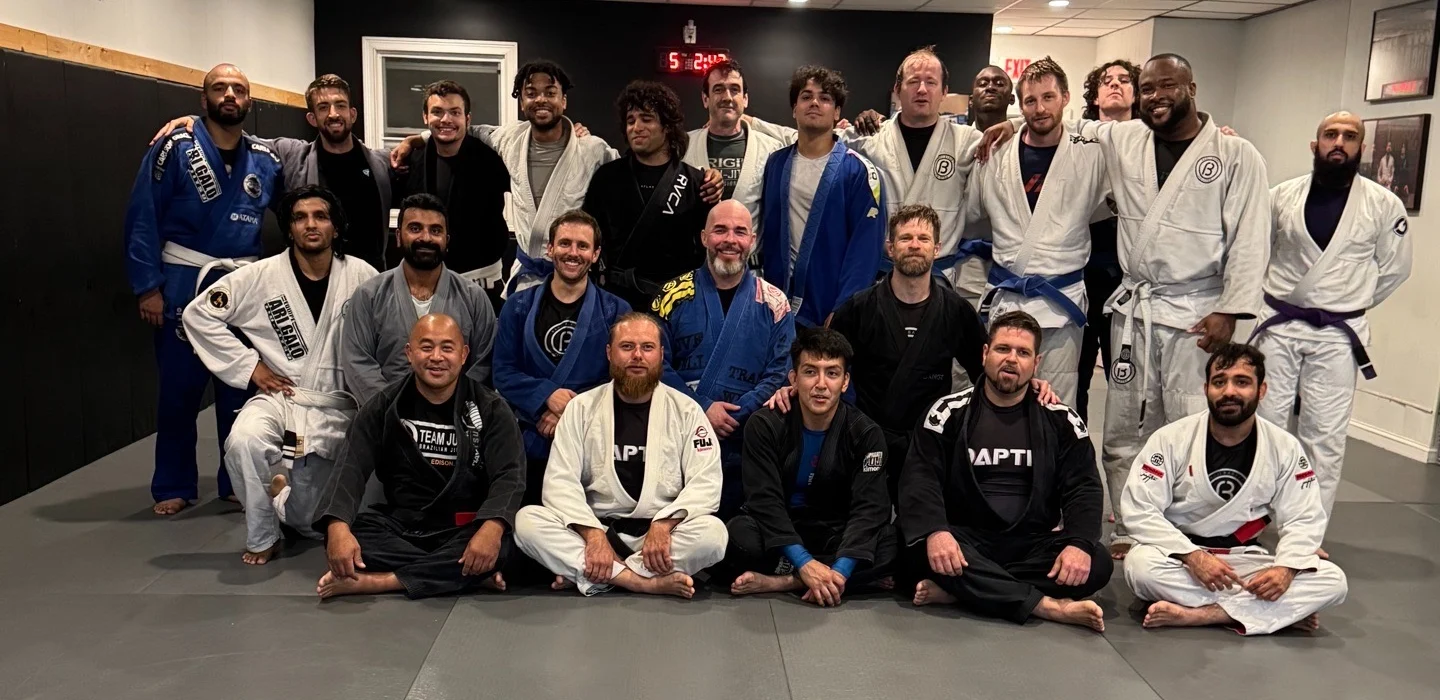
And one more reason: I need a sanctuary away from it all.