Maybe you have wanted to try jiu-jitsu for years. Now you are wondering whether the sensible time to start has already passed, especially if your last regular workout was a while ago.
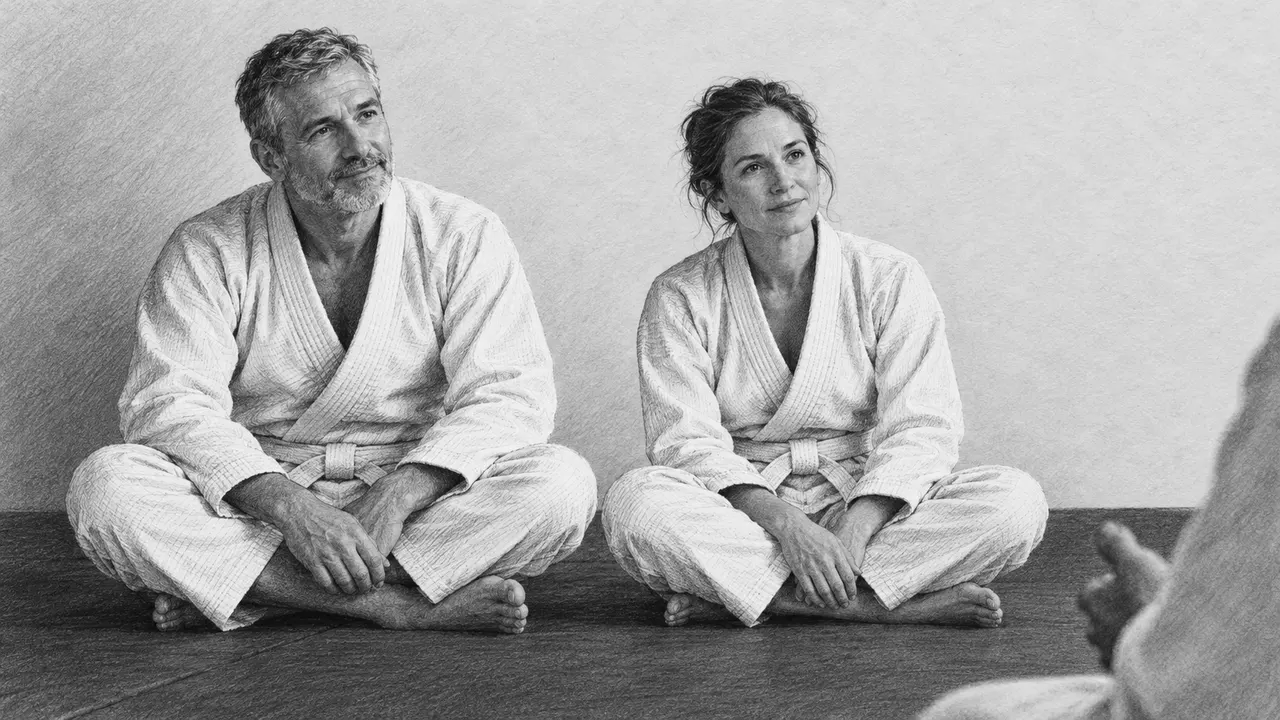
Forty is not, by itself, a reason to rule out Brazilian Jiu-Jitsu. Neither is turning 50. Your health, current activity level and the kind of training you choose matter more than finding a magic birthday cutoff. The useful question is not whether you can keep up with a 22-year-old. It is whether you can begin at an appropriate pace and keep learning.
Is 40 too old to start Brazilian Jiu-Jitsu?
You do not need a martial arts background to become a beginner. Our adult jiu-jitsu program in Fords welcomes people with no previous experience; there is no separate over-40 program being promised here.
That does not make every class, partner or intensity level suitable for every person. If an old injury, a health condition or current symptoms make you unsure about contact training, discuss those concerns with a qualified healthcare professional before participating. We can explain the class, but a coach cannot provide medical clearance.
What draws adults to the mats later in life?
Not everyone wants another workout to count or another performance target to chase. Learning how to maintain balance, create space or understand a position can make physical activity interesting in a different way. Some people want a skill to work on; others want an activity that does not revolve around work or parenting.
You are allowed to arrive with modest goals. Remembering one detail from class, asking a better question or making time for a regular practice are useful aims. You do not need to plan a competition career to be curious about jiu-jitsu.
What should an older beginner realistically expect?
At first, the unfamiliarity may be more noticeable than your age. Moving on the ground, remembering a sequence and coordinating with a partner can feel awkward even if you are already active. You may understand the explanation and still need it demonstrated again.
Give yourself room to be new. A useful early question is, “What am I trying to do in this position?” rather than “Why did I lose?” Drilling a movement and trying it against resistance are different learning tasks. Neither needs to become a test of your worth or toughness.
Do you need to get in shape first?
You do not have to pass a fitness test before asking about a beginner class. Equally, being welcome does not mean you should jump straight from inactivity into hard rounds. Start with a conversation about what you currently do and what participation would involve.
The Physical Activity Guidelines for Americans advise inactive adults to start with small amounts of lower-intensity activity and increase gradually. That is general exercise guidance, not evidence that any particular jiu-jitsu session is appropriate for you. If you need a gentler starting point, walking and other suitable activity can be part of getting moving while you clarify your readiness for contact training.
Manage contact, intensity and recovery deliberately
Jiu-jitsu is a contact sport involving pressure, joint locks and chokeholds. Injuries can happen in practice as well as competition; opting out of competition does not remove that risk. A 2024 systematic review of jiu-jitsu injuries describes injuries including those affecting knees, ribs and shoulders, but it cannot tell a new student their personal probability of injury.
- Speak before practice: tell the instructor about relevant limitations and ask which parts you should observe or modify. Tell your partner what pace you have agreed on.
- Learn how to stop: ask the coach to explain tapping and verbal stop signals before partner work. Do not wait through pain to prove you can tolerate a position.
- Ask for appropriate pairings: communicate if a partner's pace, size or approach feels beyond what you can manage. You can decline or stop a round.
- Leave room between demanding sessions: notice how you feel afterward and how training fits with sleep, work and other activity. Do not turn fatigue into a challenge to push harder.
Reduced intensity and clear communication are precautions, not guarantees. New pain or persistent symptoms deserve attention rather than a diagnosis from a training partner. For broader beginner questions, see our guide to BJJ safety; no contact sport should be described as injury-free.
Technique and patience are better goals than keeping up
Technique means learning where your body belongs and why a movement works, not pretending that strength, speed or size stop mattering. An experienced younger partner may move faster than you. That does not mean you need to match their pace.
For example, during a drill you might focus on placing your feet correctly before adding movement. During optional positional practice, you might ask to begin from the position the class just covered. Let the instructor help you choose a manageable task instead of measuring the session by who “won.”
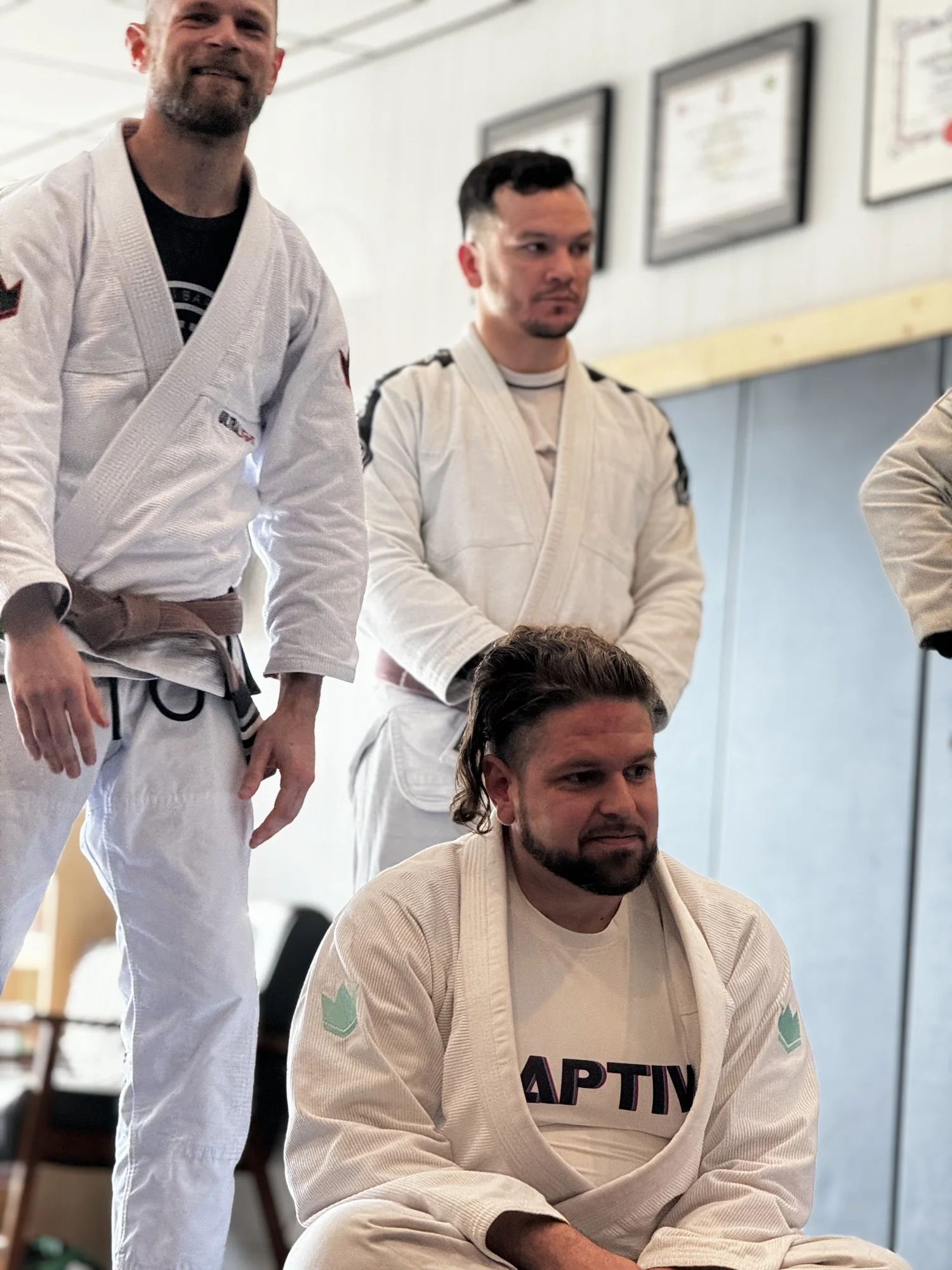
How often should beginners over 40 train?
There is no researched, one-size-fits-all BJJ timetable for everyone over 40. Our general beginner training-frequency guide discusses two to three classes a week, but that is not an entry requirement or an age-specific medical recommendation.
A manageable starting plan might be one introductory class, followed by a conversation about how it felt. If two sessions fit your recovery and schedule, spacing them apart may be more practical than attending consecutive evenings. Build from what you can sustain rather than copying someone else's attendance.
Gi or No-Gi: which should you start with?
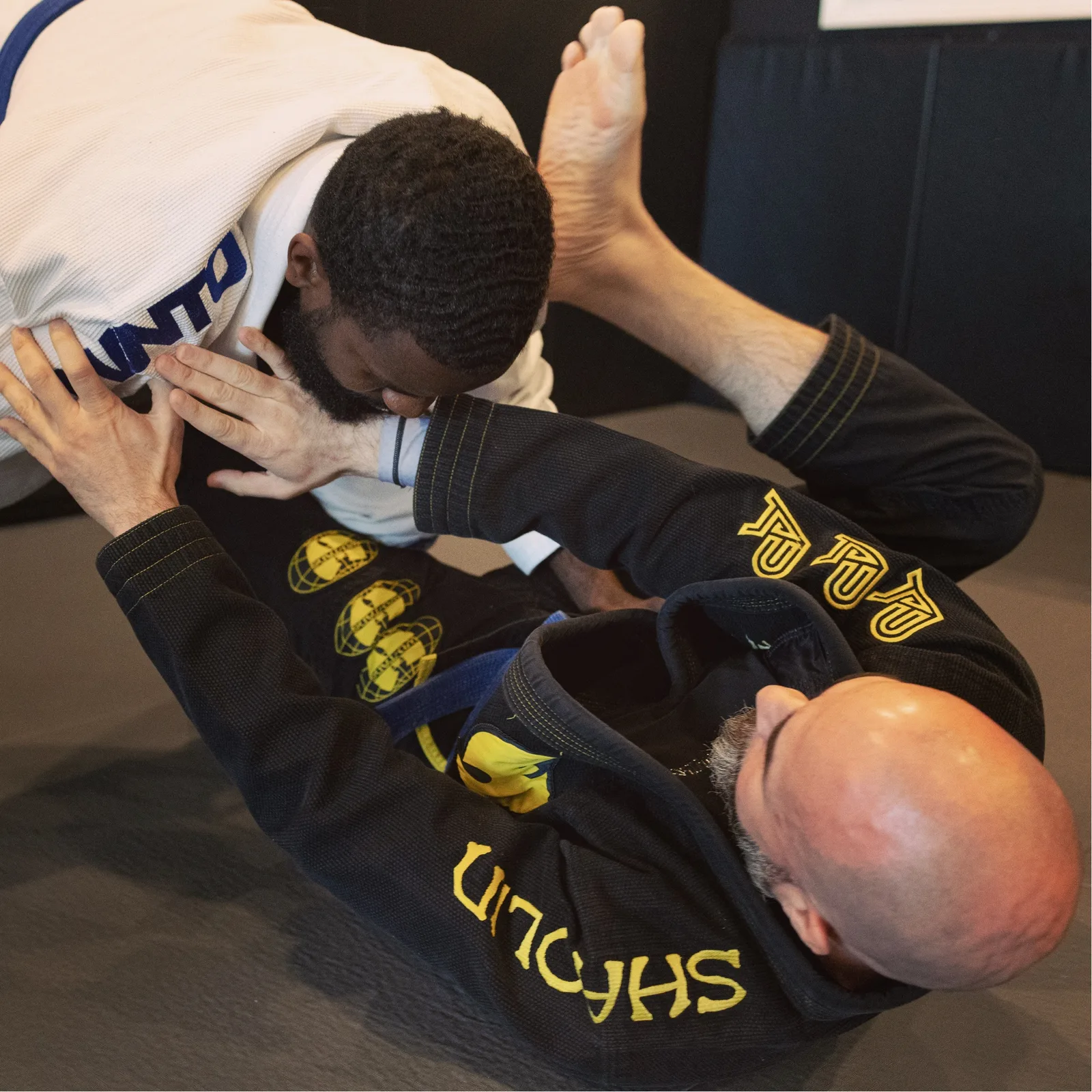
Gi training uses a jacket and trousers that partners can grip. No-Gi uses fitted athletic clothing without those cloth grips. Both involve close contact and learning to control positions; neither is automatically gentle or safer because of the clothing.
For an older beginner, the instructor's approach, your partner and the agreed intensity are more useful selection criteria than assuming Gi is always slow or No-Gi is always fast. Our Gi versus No-Gi guide explains the equipment and grip differences. Ask which introductory session is appropriate before buying anything.
What does a first class at RBJJ involve?
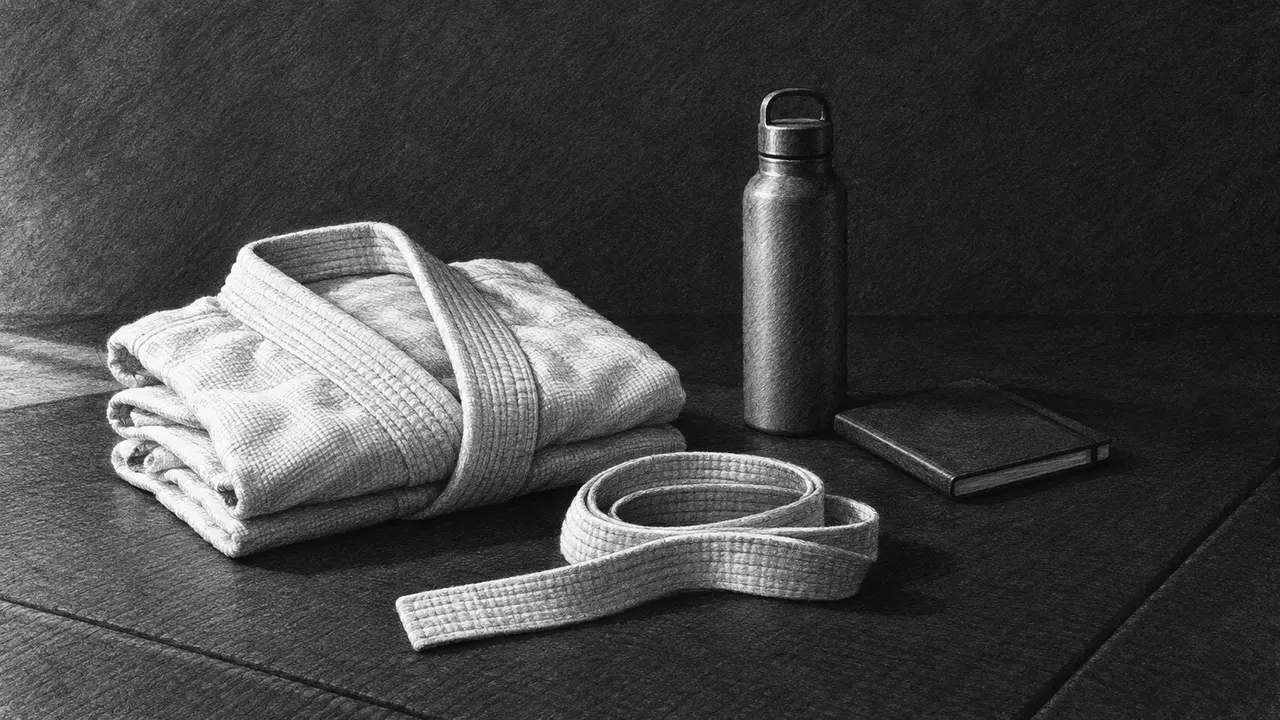
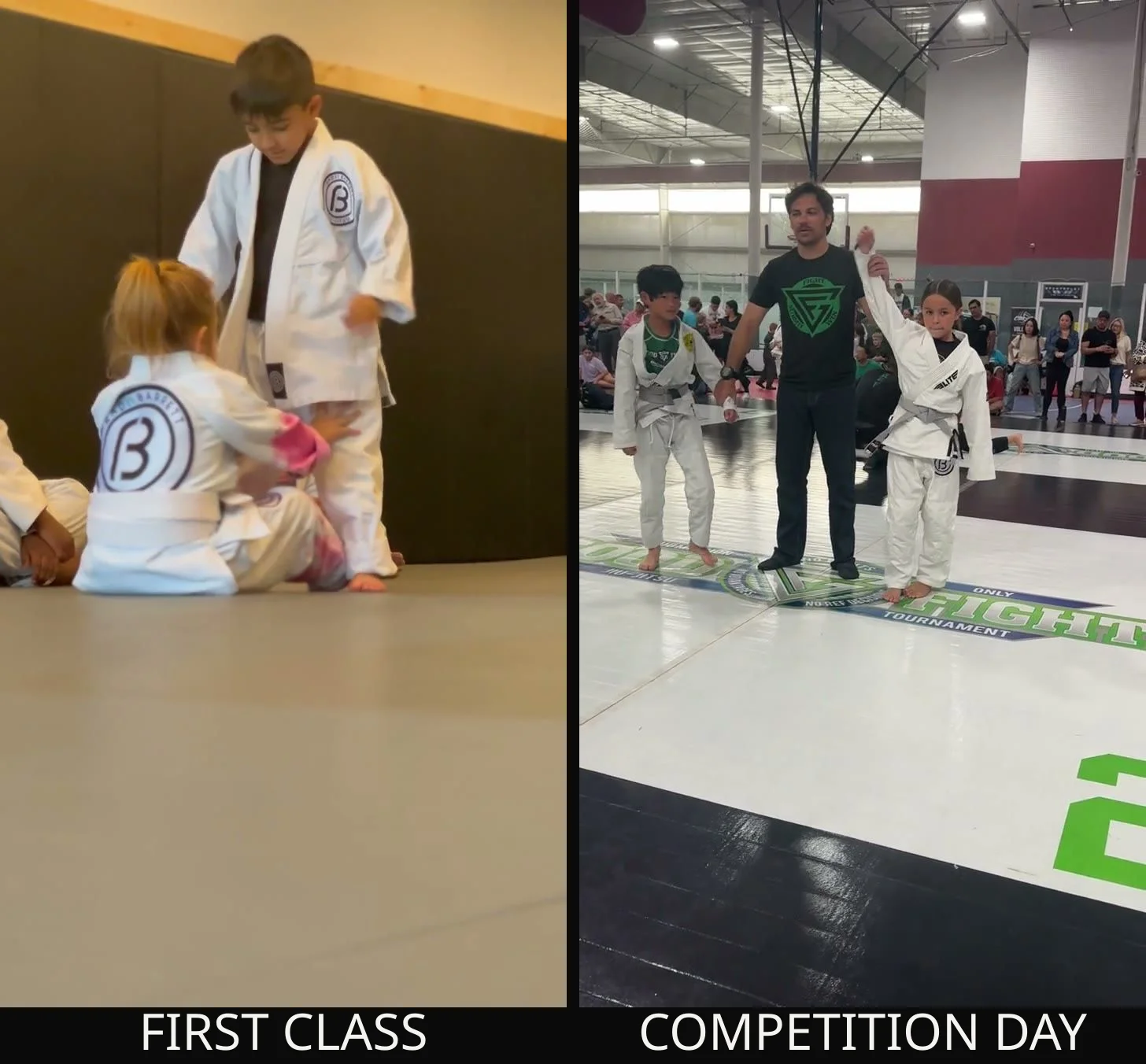
Our first-class guide describes a warm-up, instructor demonstration and partner drilling. Live practice is optional for beginners; you can observe instead of treating the first visit as a sparring appointment. Tell the coach you are new and discuss any concerns before class starts.
Arrive 10–15 minutes early to get settled and complete the waiver. Wear a fitted athletic shirt with shorts or leggings free of zippers, metal and pockets, and bring water and a towel. Remove jewelry, trim your nails and wear footwear off the mats; training itself is barefoot. No gi is required for the free trial. Our clothing checklist covers the details.
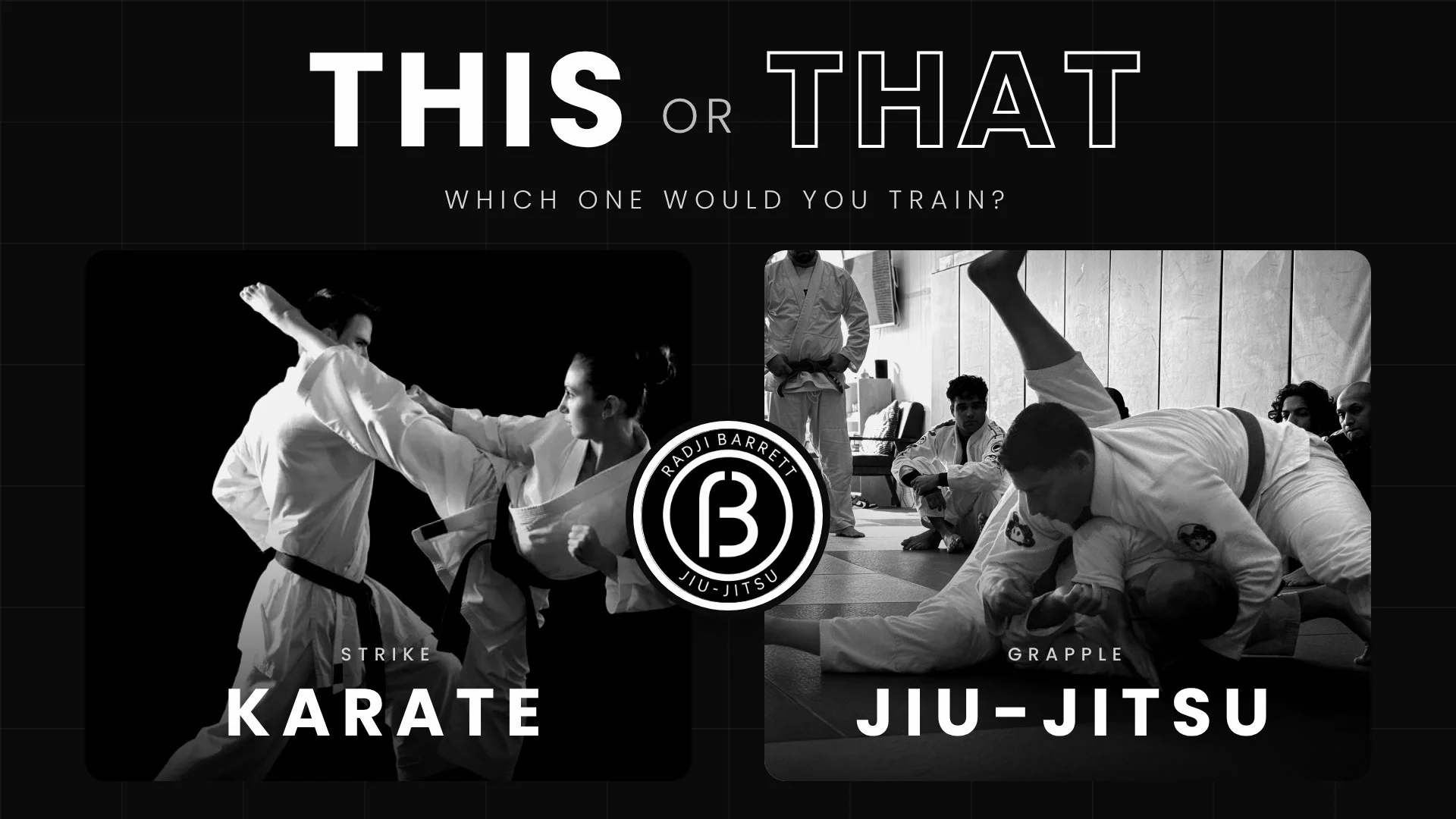
Check the current schedule and the available options in the adult trial booking flow rather than assuming every open mat is a beginner lesson. The schedule includes Gi Beginner classes, No-Gi and NoGi Fundamentals; it also lists wrestling and striking separately. Ask us to help you choose a suitable first session.
How to recognize a beginner-friendly academy
Look beyond whether the room contains people your age. Watch how questions are received, whether partners respect stop signals and whether a beginner can sit out without being pressured. Those observations are more useful than a promise that an academy is suitable for absolutely everyone.
- Introduction: who explains the basics and helps choose a first class?
- Partner practice: how are pairings, intensity and live rounds managed?
- Limitations: can you discuss concerns privately and observe an activity instead?
- Practical fit: can you attend consistently without creating an unrealistic weekly commitment?
- Costs: what does membership include, and what equipment costs extra?
Our current adult membership is $175 per month, with unlimited Gi and No-Gi BJJ, wrestling and striking, on a month-to-month basis. Equipment is separate. Unlimited access is an option, not an instruction to train every day.
Questions about starting in your 40s and 50s
Is starting jiu-jitsu at 50 different from starting at 40?
There is no universal change on either birthday. Current health, previous injuries, activity and recovery need individual consideration; neither age alone nor good general fitness tells you how contact training will feel.
What if I am not flexible enough?
You do not need to demonstrate a particular stretch to ask about a beginner class. Tell the instructor which movements are limited, do not force a joint into position, and seek professional advice if pain or a health condition affects movement.
Can I learn without entering tournaments?
Our adult program welcomes hobbyists as well as competitors. Learning in class and entering an event are separate choices; there is no need to choose a competition goal before trying a class.
Starting locally, at a pace you can discuss
Radji Barrett Jiu-Jitsu Academy is at 540 New Brunswick Ave, Fords, NJ 08863, within Woodbridge Township and near Edison in Middlesex County. Professor Radji Barrett is our founder and head instructor. If you are considering the journey from a nearby community, look at the class times as well as the location so the plan works for your actual week.
You do not need to decide today how many years you will train. The first decision is smaller: learn what the class involves, ask your questions and find out whether the environment is a fit.
Curious about your first class?
Thinking about starting Jiu-Jitsu after 40? Come experience a class at Radji Barrett Jiu-Jitsu in Fords. No experience necessary, and no pressure to join.
Try Your First Class Free