
Work ends. Your brain doesn’t always get the memo. There’s still an unanswered email, a deadline getting closer and a conversation you’re replaying on the drive home.
For busy professionals considering Brazilian jiu-jitsu (BJJ), the interesting question isn’t whether you can add another obligation. It’s whether time on the mats could give you something work doesn’t: a place to move, learn and practice responding to pressure without another screen.
Elijah Reyes, in his own words
Elijah is an RBJJ purple belt, a jiu-jitsu enthusiast and a jiu-jitsu dad. Here’s how he describes the connection between work and training:
I didn’t expect jiu-jitsu to become the quiet backbone of how I live and work. At work, I help guide a team of over 500 people, and the pressure can be intense. Deadlines, reporting, the weight of not wanting to let anybody down.
On the mats, that weight feels familiar, but in a good way. When someone bigger, stronger, or just more technical is pressuring you, you can’t fake your way out. You breathe, you frame, you adjust, you stay in it, and over time that practice started reshaping how I handle stress at work.
Instead of rushing or reacting, I try to relax under pressure. When a roll goes bad, you analyze, breathe, and go again. That loop, lose, learn, return, is exactly what makes you sharper, not perfect.
What’s stuck with me the most is that part about leaning into weak spots instead of dodging them. Jiu-jitsu makes that unavoidable. If something’s not working, you have to feel it, adjust it, deal with it right there. And that’s the same at work.
When problems repeat, the point isn’t to escape them, it’s to lean in, get curious, and work the problem. That mindset turns frustration into practice instead of panic.
For me, that’s the gift. Showing up to the hard stuff, on the mats and in the office, and letting that shape a steadier version of me.
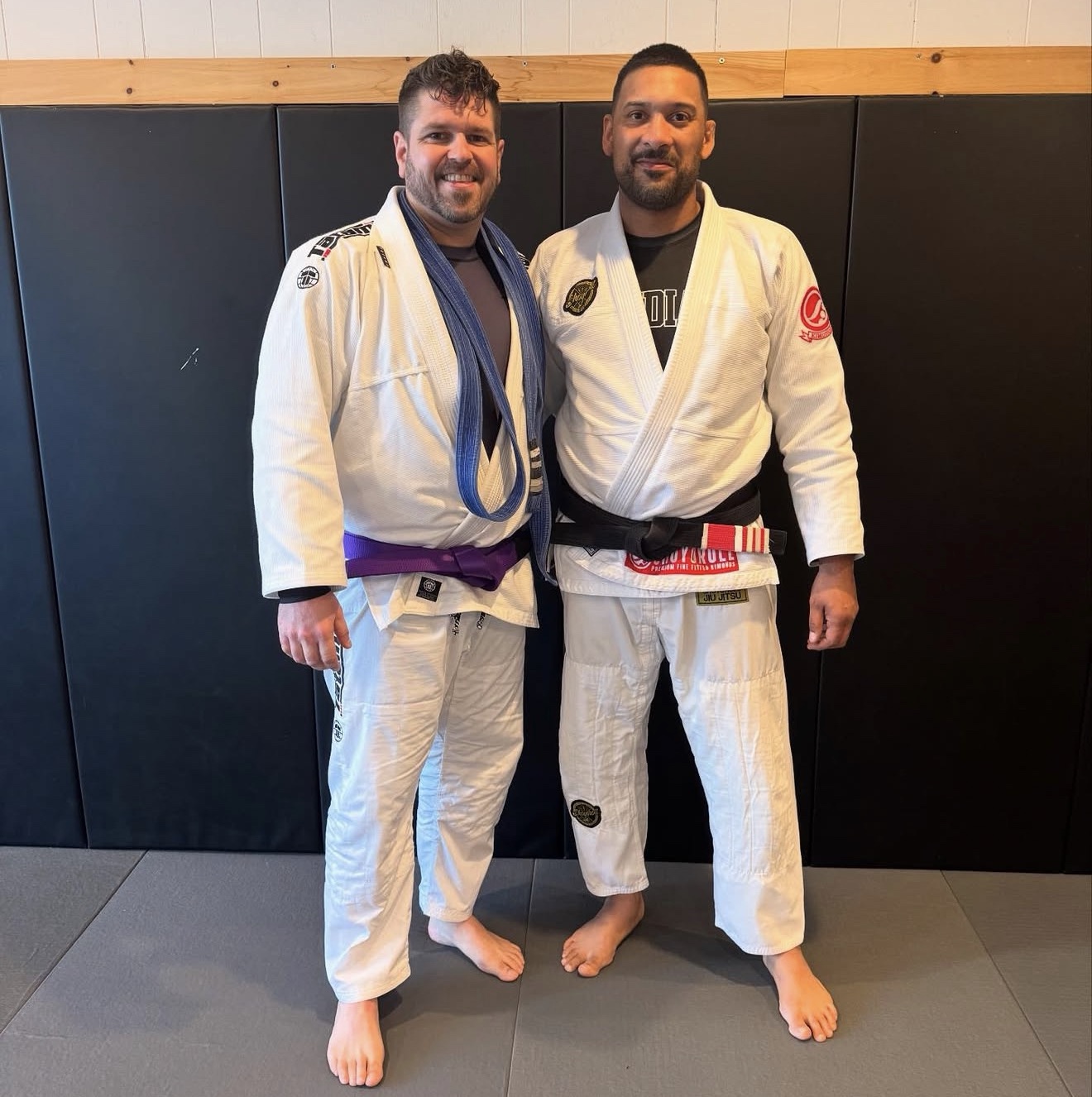
For Elijah, the value is in the practice: meeting pressure, adjusting and trying again.
Movement, breathing and connection
- Physical activity: Regular activity can reduce symptoms of anxiety and depression and improve sleep, according to the World Health Organization.
- Breathing: A randomized study comparing daily five-minute breathwork with mindfulness over one month found that exhale-focused cyclic sighing produced greater improvements in mood and reductions in breathing rate than mindfulness (Cell Reports Medicine). The study tested structured breathing exercises, not breathing during jiu-jitsu.
- BJJ and wellbeing: A 2024 study of eight practitioners’ interviews identified themes including meaningful goals, healthy habits and positive relationships (Morris and Bone, Mental Health and Social Inclusion). This small interview study describes personal experiences rather than proving cause and effect.
From mat pressure to the next useful decision
Before answering a difficult email or reacting to a last-minute request, try a short pause. What is happening, what matters most, and what is one useful next step?
On the mat
Breathe before rushing.
At work
Pause before replying.
On the mat
Notice what isn’t working.
At work
Clarify the actual priority.
On the mat
Try a different response.
At work
Choose one next action.
Try it with your next pressured request: identify what is needed, who owns it and when it is actually due. If the same problem keeps returning, look for a missing decision, unclear handoff or unrealistic expectation before simply working faster.
Work-life balance starts with a realistic routine
Training shouldn’t become another deadline you’re failing to meet. Before committing, make a plan for the week you actually have, not the one where work and family never interrupt.
- Check the whole commitment: Include commuting, changing and responsibilities at home, not just class time.
- Protect recovery: Choose a pace that doesn’t depend on regularly sacrificing sleep.
- Define a useful first step: Ask a coach about an appropriate introduction and aim to learn, not prove yourself.
Use our guide to how often to train jiu-jitsu to think through frequency, and The Winning Mindset for another academy perspective on learning rather than winning every round.
Invite a coworker. Maybe the inbox improves.
Invite a coworker to open mat, and you might finally get a response to that email. Maybe the deadline gets met, too.
No promises about the inbox. Think of it as a chance to share something outside work, not another team-building assignment.
Browse the RBJJ schedule for open mats and classes. If your coworker is new, ask which session is an appropriate introduction rather than assuming an open mat is a beginner class.
Start with one class, not a new identity
Our first BJJ class guide can help with the unfamiliar part. If a health concern makes you unsure about participation, get medical guidance; training is not a replacement for mental-health care or a fix for an unhealthy workload.
Your inbox may still be full afterward. But it doesn’t have to be the only thing your day was about.

Curious what Jiu-Jitsu could bring into your life? Experience your first class at Radji Barrett Jiu-Jitsu in Fords, NJ.
Book Your Free Trial