
The Parent’s Guide Central New Jersey
The Parent’s Guide to Kids’ Activities, Martial Arts & After-School Programs in Central New Jersey
From the pool to the playing field to the mats, find an activity your child wants to come back to.
Compare activities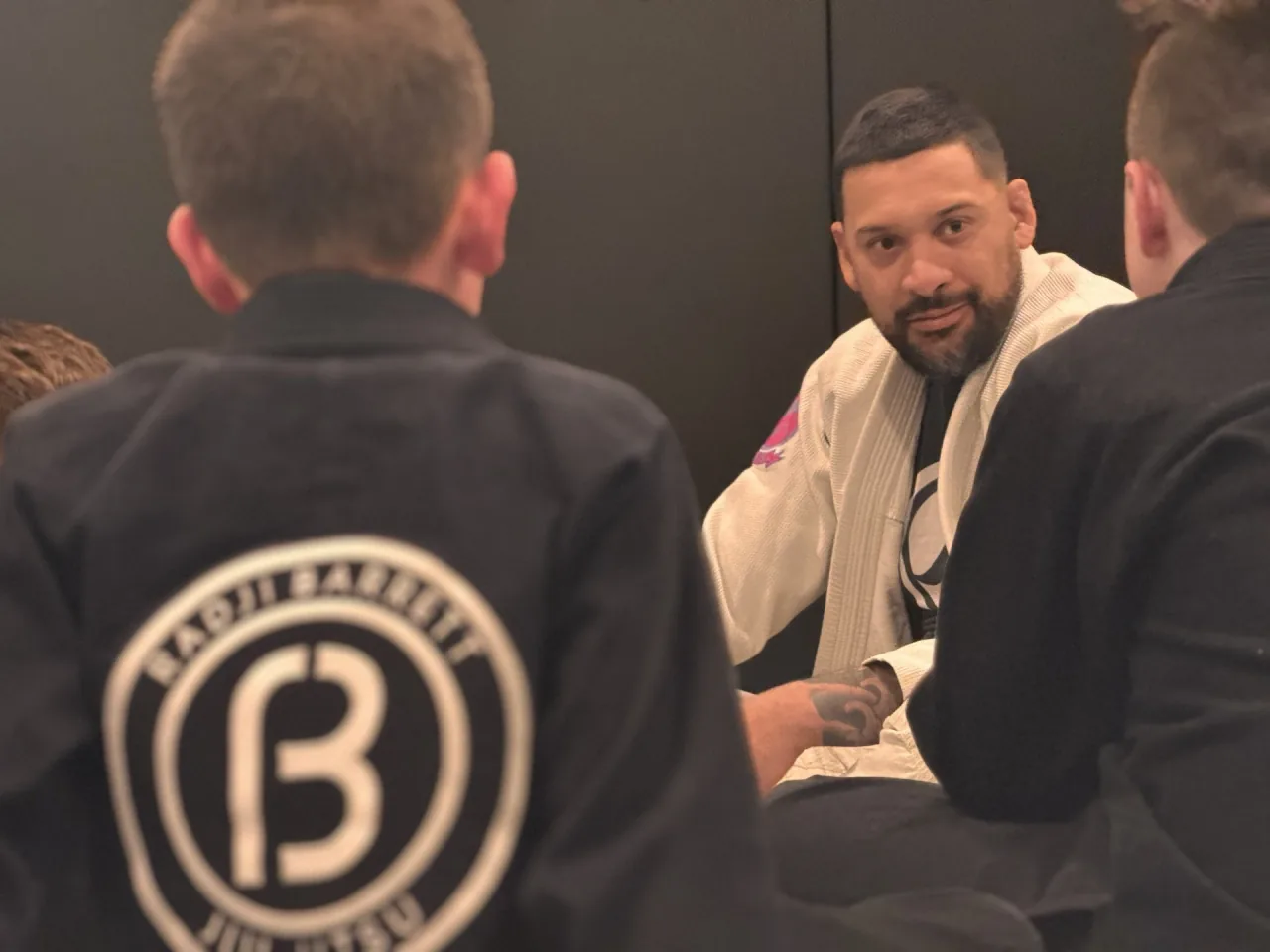
The first time you walk into a new activity, pay attention to the minute before class starts. Does someone notice your child is standing off to the side? Do they explain what happens next? Does your child look like they can ask a question without feeling embarrassed? The answers can tell you more than a brochure full of promises.
If you’re looking for an after-school activity in Woodbridge Township or elsewhere in Central Jersey, start with what your child wants to try and what your family can keep up on an ordinary week. We teach Jiu-Jitsu in Fords, but the right first choice might be swim lessons, dance or a team sport.
Compare kids’ activities at a glance
Open any row to compare it with Brazilian Jiu-Jitsu. You’ll see what children practice, how much contact to expect, and a question to ask before signing up.
SwimmingWater skills & strokes
Swimming vs. Brazilian Jiu-Jitsu
Practicing in water builds a skill that training on mats cannot replace. BJJ is for kids who want to work on balance, escapes and decision-making with a partner.
Swimming
- Practice
- Water skills, stroke technique and the confidence to move in a different environment.
- Contact
- No sparring. Ask about water supervision and how swimmers are grouped by ability.
- Schedule
- Ask whether your child is reserving a weekly slot or registering for a block of lessons.
Brazilian Jiu-Jitsu
- Practice
- Grappling, balance, escapes and solving problems with a partner.
- Contact
- Close partner contact. A beginner can learn movements cooperatively before adding supervised resistance.
- Schedule
- Ask how beginners are paired and whether membership gives you a choice of weekdays.
Before you decide: If water safety is the priority, start with swimming. Ask the instructor how beginners are grouped and supervised.
DanceRhythm & expression
Dance vs. Brazilian Jiu-Jitsu
Dance gives children a way to express themselves and refine a sequence. BJJ asks them to adjust a movement in response to what their partner does.
Dance
- Practice
- Rhythm, coordination, expression and learning movement sequences.
- Contact
- Usually no competitive contact. Some styles use partner work or lifts at more advanced levels.
- Schedule
- Ask about the rehearsal calendar, recital expectations and costume fees.
Brazilian Jiu-Jitsu
- Practice
- Grappling, balance, escapes and solving problems with a partner.
- Contact
- Close partner contact. A beginner can learn movements cooperatively before adding supervised resistance.
- Schedule
- Ask how beginners are paired and whether membership gives you a choice of weekdays.
Before you decide: Ask to watch the beginner group. Does your child want to try the routine or solve the partner drill?
Soccer & team sportsTeamwork & game play
Soccer & team sports vs. Brazilian Jiu-Jitsu
Soccer gives a child a role in a team working toward a shared score. BJJ still involves classmates, but much of the practice happens in pairs and progress isn’t tied to a team result.
Soccer & team sports
- Practice
- Sharing space, communicating, practicing a role and working toward a team goal.
- Contact
- Varies by sport. Soccer can include incidental collisions; modified formats can differ from full games.
- Schedule
- Check practice days, match days, the season length and where away games are played.
Brazilian Jiu-Jitsu
- Practice
- Grappling, balance, escapes and solving problems with a partner.
- Contact
- Close partner contact. A beginner can learn movements cooperatively before adding supervised resistance.
- Schedule
- Ask how beginners are paired and whether membership gives you a choice of weekdays.
Before you decide: Check the practice and game calendar. A child who dislikes games may still enjoy partner work; don’t assume they want to practice alone.
KarateForms & striking
Karate vs. Brazilian Jiu-Jitsu
Karate can emphasize forms, stances and striking. BJJ classes practice grips, body position and escapes rather than strikes. Both can include partner practice, but the type of contact differs.
Karate
- Practice
- Stances, hand strikes, kicks, balance and remembering sequences.
- Contact
- Forms and pad drills can be non-contact; sparring rules and contact vary by school.
- Schedule
- Ask what a beginner actually does and how often testing or special events take place.
Brazilian Jiu-Jitsu
- Practice
- Grappling, balance, escapes and solving problems with a partner.
- Contact
- Close partner contact. A beginner can learn movements cooperatively before adding supervised resistance.
- Schedule
- Ask how beginners are paired and whether membership gives you a choice of weekdays.
Before you decide: Ask each coach to show what beginners do and when sparring or resistance is introduced.
TaekwondoKicks & coordination
Taekwondo vs. Brazilian Jiu-Jitsu
Taekwondo may suit a child drawn to kicks, targets and precise sequences. BJJ offers a different problem: staying balanced or making space when a partner changes position.
Taekwondo
- Practice
- Kicks, balance, coordination and practicing sequences with precision.
- Contact
- Forms or targets can be practiced without contact. Ask whether sparring is part of the track and how it’s introduced.
- Schedule
- Ask whether the program has fixed beginner times and what equipment is needed later.
Brazilian Jiu-Jitsu
- Practice
- Grappling, balance, escapes and solving problems with a partner.
- Contact
- Close partner contact. A beginner can learn movements cooperatively before adding supervised resistance.
- Schedule
- Ask how beginners are paired and whether membership gives you a choice of weekdays.
Before you decide: Ask about beginner contact and equipment, then let your child tell you which class they want to try again.
WrestlingTakedowns & control
Wrestling vs. Brazilian Jiu-Jitsu
Both are grappling sports. Wrestling generally emphasizes takedowns, control and pins. A BJJ class may continue working from the bottom position, with escapes and age-appropriate submissions depending on the rules.
Wrestling
- Practice
- Takedowns, controlling position and learning to move with a resisting partner.
- Contact
- Close contact is central. Ask how coaches match children and teach safe landings.
- Schedule
- Check whether the program runs by season or year-round, and whether meets are optional.
Brazilian Jiu-Jitsu
- Practice
- Grappling, balance, escapes and solving problems with a partner.
- Contact
- Close partner contact. A beginner can learn movements cooperatively before adding supervised resistance.
- Schedule
- Ask how beginners are paired and whether membership gives you a choice of weekdays.
Before you decide: Ask about partner matching and whether practices or meets are tied to a season.
BoxingFootwork & striking
Boxing vs. Brazilian Jiu-Jitsu
Boxing drills build striking timing and footwork; bag or pad work is different from sparring. BJJ doesn’t train punches to a partner, but grappling still involves sustained physical contact.
Boxing
- Practice
- Footwork, timing, movement and striking skills taught with pads or bags.
- Contact
- Non-contact training and sparring are different. Ask whether sparring or blows to the head are allowed at all.
- Schedule
- Look for a clearly labeled youth fundamentals class rather than assuming it follows the adult program.
Brazilian Jiu-Jitsu
- Practice
- Grappling, balance, escapes and solving problems with a partner.
- Contact
- Close partner contact. A beginner can learn movements cooperatively before adding supervised resistance.
- Schedule
- Ask how beginners are paired and whether membership gives you a choice of weekdays.
Before you decide: Ask exactly what contact is allowed, including whether there is any head contact, and what a new child can sit out.
GymnasticsBalance & body control
Gymnastics vs. Brazilian Jiu-Jitsu
Gymnastics develops movement on the floor or apparatus, often through individual skill progressions. In BJJ, children use balance and body awareness to adjust to another person.
Gymnastics
- Practice
- Body awareness, coordination, balance and flexibility through progressions.
- Contact
- Solo apparatus or floor work with coaching and spotting as appropriate. Ask how new skills are supervised.
- Schedule
- Check age or skill placement, equipment expectations and the session calendar.
Brazilian Jiu-Jitsu
- Practice
- Grappling, balance, escapes and solving problems with a partner.
- Contact
- Close partner contact. A beginner can learn movements cooperatively before adding supervised resistance.
- Schedule
- Ask how beginners are paired and whether membership gives you a choice of weekdays.
Before you decide: Ask how coaches supervise new skills and how they decide when a child is ready to progress.
General youth fitnessVariety & active play
General youth fitness vs. Brazilian Jiu-Jitsu
A youth fitness program may rotate through games and movement skills. BJJ offers a more specific skill to build over time, with repeated opportunities to practice with a partner.
General youth fitness
- Practice
- A mix of games, movement skills and age-appropriate strength and endurance activities.
- Contact
- Contact depends on the activities. Ask whether the emphasis is active play, instruction or conditioning.
- Schedule
- Check what a regular class includes and whether families enroll per session, month or program block.
Brazilian Jiu-Jitsu
- Practice
- Grappling, balance, escapes and solving problems with a partner.
- Contact
- Close partner contact. A beginner can learn movements cooperatively before adding supervised resistance.
- Schedule
- Ask how beginners are paired and whether membership gives you a choice of weekdays.
Before you decide: Would your child rather try a mix of activities or come back to the same skill and see what’s changed?
Class formats vary by program. Ask what your child would actually do in a beginner class.
For swimming, the CDC notes that formal lessons can reduce drowning risk, but they don’t replace close adult supervision.
Start with the child, not the activity
What does your child choose when no one is directing them: music, the pool, or a ball and a friend? That’s a clue to what they might want to try. The American Academy of Pediatrics’ sports-readiness guide recommends matching the demands of the sport to a child’s physical, mental and social readiness, not relying on age alone.
Three things to notice on the first visit
- The welcome Does someone explain where to start and what a first-timer can sit out?
- The correction Can a child make a mistake, get useful feedback and try again without feeling singled out?
- The real week Can the trip fit around homework, dinner and sibling pickup? What if your usual day changes?
On the ride home: Instead of “Did you like it?” ask, “What would you want to do again?” A child may remember a partner, a game or getting the rhythm right before they know how they felt about the whole class.
If you need supervision from dismissal until pickup, look for school aftercare rather than a sports class. Woodbridge families can start with Woodbridge Township Recreation for program registration and ask their school about aftercare. A scheduled class, a drop-in activity and a school-day childcare program solve different problems.
What makes Brazilian Jiu-Jitsu different?
Brazilian Jiu-Jitsu is mostly grappling. Instead of learning to punch or kick a partner, children learn to move and keep their balance when another person is close. They practice getting out of difficult positions and using their body position to create space rather than trying to push harder.
Think of a heavy door. It’s easier to push at the handle than near the hinge. That’s leverage. On the mats, a child might find that shifting their weight works better than pulling harder.
Practicing with a partner changes the problem
Partners first let each other try a movement slowly. When the coach thinks they’re ready, a partner may offer a little resistance in a supervised exercise. Now the child has to notice a shift in weight and try a new angle. A tap or a verbal stop means release immediately, not try harder.
What might carry home
Imagine a child who keeps getting stuck during a drill. A coach can help them name one thing to try next. Another child might have the move down but need to slow their pace for a newer partner. Those are chances to practice listening and handling frustration, not promises about behavior outside class.
A systematic review of organized youth sport found associations with psychological and social benefits, but much of the evidence was observational. It didn’t establish that Jiu-Jitsu causes those outcomes. Training isn’t a substitute for medical, behavioral or psychological care.
If your child likes martial arts but you’re deciding between grappling and striking, our guide to karate, Taekwondo and Jiu-Jitsu goes deeper into what each class might look like.
Safety: what to ask before your child gets on the mats
Grappling doesn’t make a class risk-free just because there’s no punching or kicking in ordinary BJJ practice. Contact, falls, joint stress, accidental impacts and injury are possible. Striking classes also vary: hitting pads isn’t the same as sparring with a partner. The American Academy of Pediatrics’ parent guide to martial arts recommends learning form and technique before adding contact. It doesn’t make sense to rank an entire martial art as safer than another without knowing what children are doing and how they’re supervised.
- Attentive coaching: Are instructors watching pairs and correcting unsafe behavior promptly?
- Age-appropriate instruction: Do they explain what beginners are allowed to try and how contact is introduced?
- Clear stop rules: Do children know how to tap or say stop, and do partners let go right away?
- Appropriate partners: How are children matched by size, readiness and experience? Who steps in if the pairing isn’t working?
- Positive communication: Can children ask for help, request a break and make mistakes without embarrassment?
- Parent observation: Is there a place to watch? Does the class you see match what the school described?
At RBJJ, parents can watch from the viewing area. Our participation rules require students to train with control and respond immediately to a physical or verbal tap. Let the coach know about any relevant injury or limitation before class, and ask your child’s healthcare professional if you’re unsure whether contact exercise is appropriate.
Meet the fathers behind the kids’ program
The kids’ program takes its direction from Professor Radji Barrett. He sets what children learn and how it’s taught, and Coach Angel Ortiz and the rest of the kids’ team carry that instruction into class. Radji and Angel are both practitioners and fathers whose children train. An instructor can ask whether a child learned the move; a parent also wants to know how the child felt about coming back.
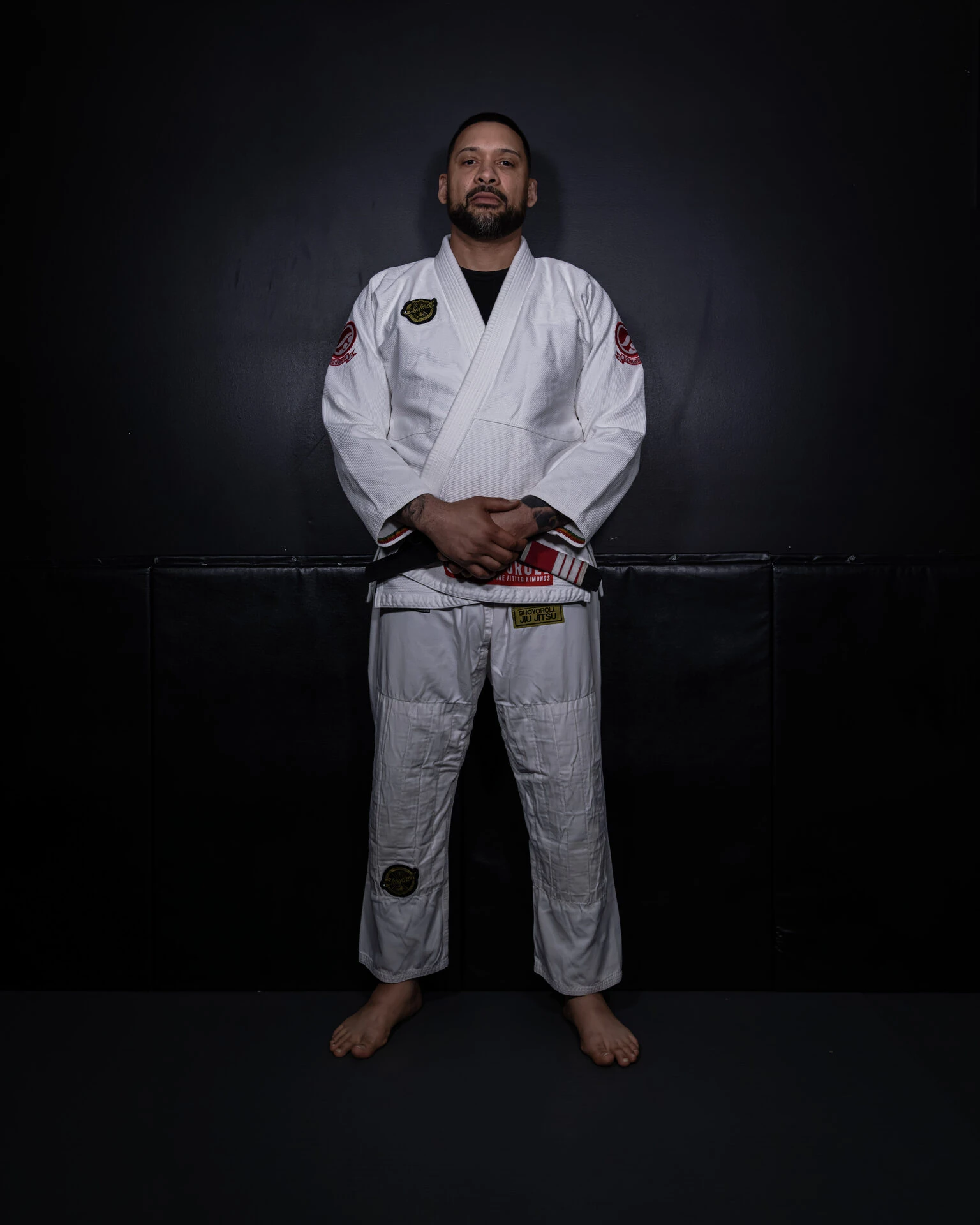
Founder, owner & head instructor
Professor Radji Barrett
Professor Radji is a third-degree Brazilian Jiu-Jitsu black belt. He sets the curriculum for the academy, including the fundamentals taught in every kids’ class. He personally chooses the instructors he trusts to teach those fundamentals with empathy and discipline: patient when a child needs more time, clear when it’s time to listen or reset.
About Professor Radji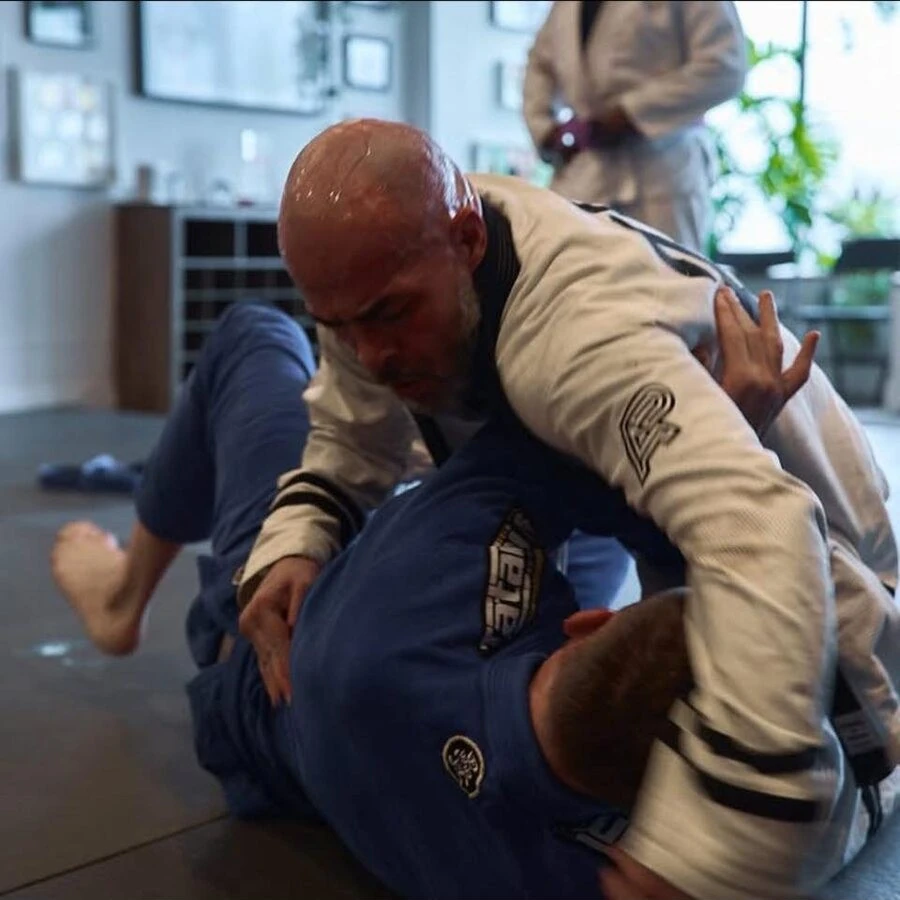
Kids’ instructor & Jiu-Jitsu parent
Coach Angel Ortiz
Angel watched his children train before he became a student himself. Now he brings both perspectives to the kids’ class. He wants children to learn to hear a correction, try again and see that improvement comes from consistent practice. On a hard day, progress might simply mean being willing to give it one more try.
Meet the coaching teamA nervous child may need to watch a demonstration before picking a partner. A child with energy to spare may need a clear job and a reminder to go slowly. A competitive child may have to practice being a good partner when they’re disappointed. The coaches’ job is to notice the difference and find a challenge the child is ready for, not make everyone respond the same way.
Angel has written about what he learned from the hard days of his own children’s training. One useful distinction in that piece is between an ordinary struggle and an experience that feels unsafe. Both deserve an adult’s attention; they don’t call for the same response.
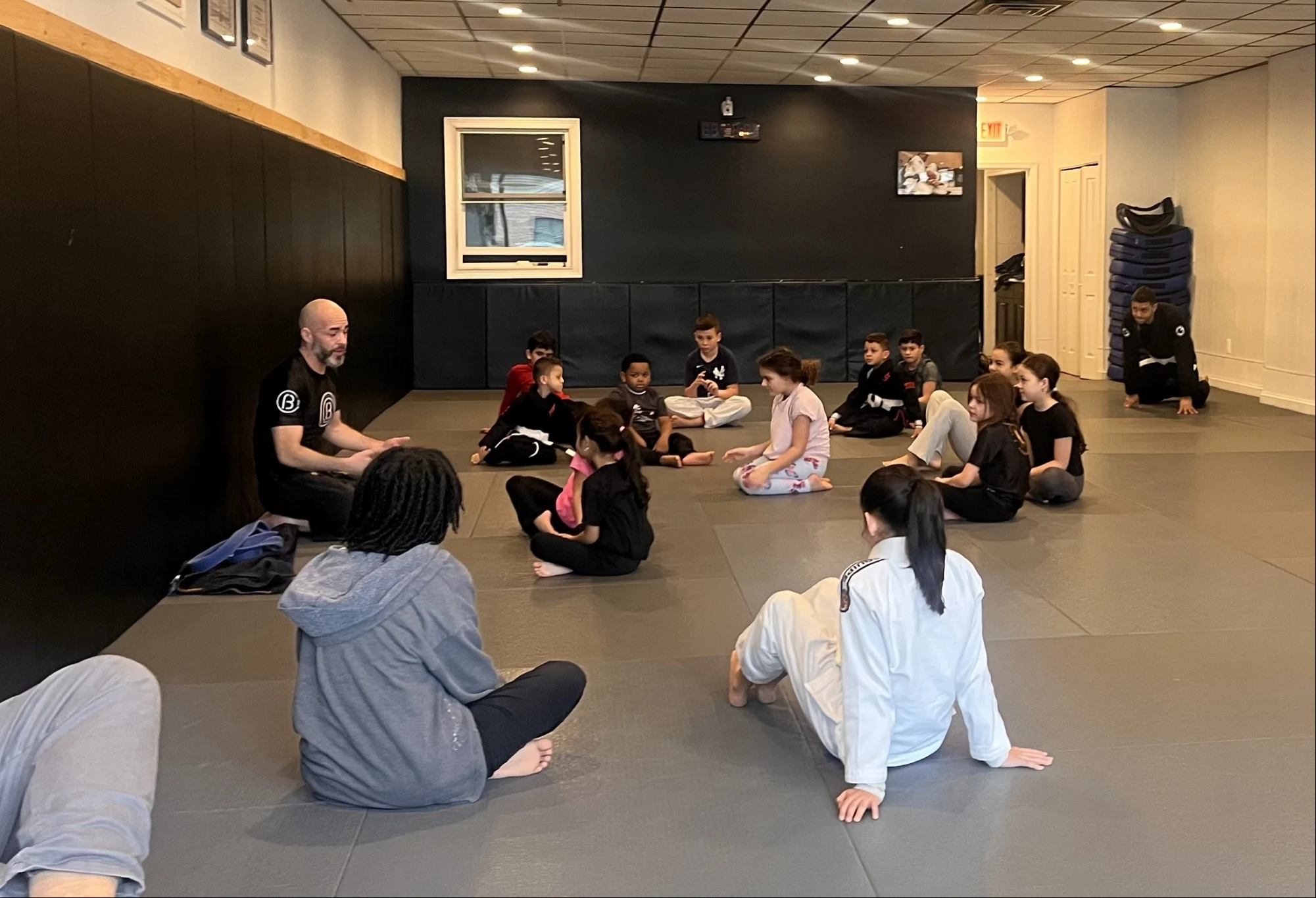
One monthly rate. Five days to choose from.
The posted kids’ membership is $140 a month. It’s month-to-month, with no initiation fee or long-term contract. A gi or rash guard is not included, and neither are entry fees if your family chooses to compete. Ask which gear your child will need before you buy anything. If more than one family member wants to train, ask about family plans.
Kids’ classes are offered Monday through Friday. Your child doesn’t need to attend all five days. Pick the days that fit and the classes your child is eligible for. A family might come twice a week around soccer practice, or switch weekdays when work or a sibling’s lessons change. It’s one monthly membership, not a package of individual classes.
Illustrative weekday planner
Which days could work for you?
This is for planning only, not booking. Choose any days to picture a week. Nothing is saved, and the price doesn’t change.
Younger group: 5:00–5:45 p.m.
Older group: 5:45–6:30 p.m.
Ask a coach which group is right for your child.
Check the current schedule for changes or closures.
Compare the full commitment, not just the monthly rate. Ask what it costs to join, what gear or events cost extra, and what happens if you miss a week. A fixed slot can be great if you know you’ll be free; a choice of weekdays may help if your routine changes.
How classes can fit the school year and summer
During the school year, ask which evening still feels manageable once homework, meals and getting home are accounted for. A child who already has a weekend game and two practices may not need another standing commitment. They might prefer trying one weekday or waiting until the season ends.
In summer, a regularly scheduled class can provide some continuity without taking up the whole day. The same can be true when a team season winds down and your child wants a way to keep moving. Check the current class schedule before you plan around a holiday or school break. RBJJ offers scheduled Jiu-Jitsu instruction, not summer camp, daycare or school-dismissal pickup.
Organized classes are only one part of being active. The CDC’s activity guidance includes everyday movement and play as well as sports. A walk, a pickup game or time outdoors can belong in the same week as a class. A useful routine leaves room for rest and for activities a child chooses simply because they enjoy them.
What to expect at a free kids’ trial
- Choose a day Check availability for a kids’ No-Gi trial on Tuesday or Thursday.
- Dress for movement A T-shirt and athletic shorts are enough. A parent or legal guardian should complete the waiver.
- Meet the coaches Ask how they group beginners or tell them if your child would rather watch first.
We’re at 540 New Brunswick Ave, Fords, NJ 08863, in Woodbridge Township. Try the drive at your usual pickup time, whether you’re coming from Edison, Perth Amboy, Metuchen or nearby. If your child is nervous, our guide for a first class can help you talk it through.
Try one class before committing to a routine. If you have a question first, the kids’ program page explains how classes are grouped.
Book a Free Kids' TrialQuestions parents ask
What age can my child start?
The younger group is generally around ages 5–9 and the older group around 9–13+. These are guidelines. Coaches consider readiness, size, maturity and experience, especially around age nine. Ask us if you’re unsure which group to choose.
Does my child need experience?
No. Beginners are welcome. Tell the coach it’s your child’s first class so they can explain what to expect and help them get started.
Is Jiu-Jitsu safe for kids?
It’s a contact activity and injuries are possible. Ask about partner matching, age-appropriate rules, how contact is introduced and how coaches enforce tapping. If you’re unsure whether contact exercise is appropriate for your child, ask their healthcare professional.
What if my child is shy?
Tell the coach before class. You and your child can watch first and decide how much to try. A quiet first visit is not a failed first visit.
What if my child isn’t athletic?
They don’t need to be strong, flexible or good at another sport before trying. Start with the beginner instruction and focus on one movement at a time.
How many days per week should my child train?
Start with a routine your child enjoys and your family can maintain. One or two days might be practical at first. Revisit it with your child and coach as you see how it fits with rest and other activities.
Do we have to attend every day?
No. Eligible kids’ classes are available Monday through Friday, but families choose how often to attend.
How much does membership cost?
The posted kids’ rate is $140 per month, month-to-month, with no initiation fee. A gi or rash guard and optional competition entry fees are not included. See the academy’s pricing page for current details.
What should my child wear to the trial?
Comfortable athletic clothes, such as a T-shirt and shorts. No gi is needed for the first class.
Can parents watch?
Yes. The academy has a viewing area where parents can watch, including during the first class.
How does the free trial work?
Use the booking calendar to choose a kids’ No-Gi session on a Tuesday or Thursday. A parent or legal guardian completes the required waiver. Come meet the coaches, see the room, and let your child try a class before deciding whether to join.