If you have been typing "karate for kids" or "martial arts for kids" into Google around Woodbridge Township, Edison, Metuchen, or Perth Amboy, you have probably discovered that every school describes itself the same way: confidence, discipline, focus, respect. Those words are true of good martial arts instruction in any style. They just do not answer the question you actually have, which is what your child will be doing in class, and what it will do for them.
This guide walks through the three martial arts families searching for in our area and what each one actually trains, because an educated parent makes a better decision than a sold one. It comes from an academy that teaches Brazilian jiu-jitsu, so you will get our honest perspective, including what the other arts do well.
The three martial arts families parents compare
Karate, Taekwondo, and Brazilian jiu-jitsu take fundamentally different approaches to the same goal: teaching a child to be confident, coordinated, and capable. Here is the short version, then the details.
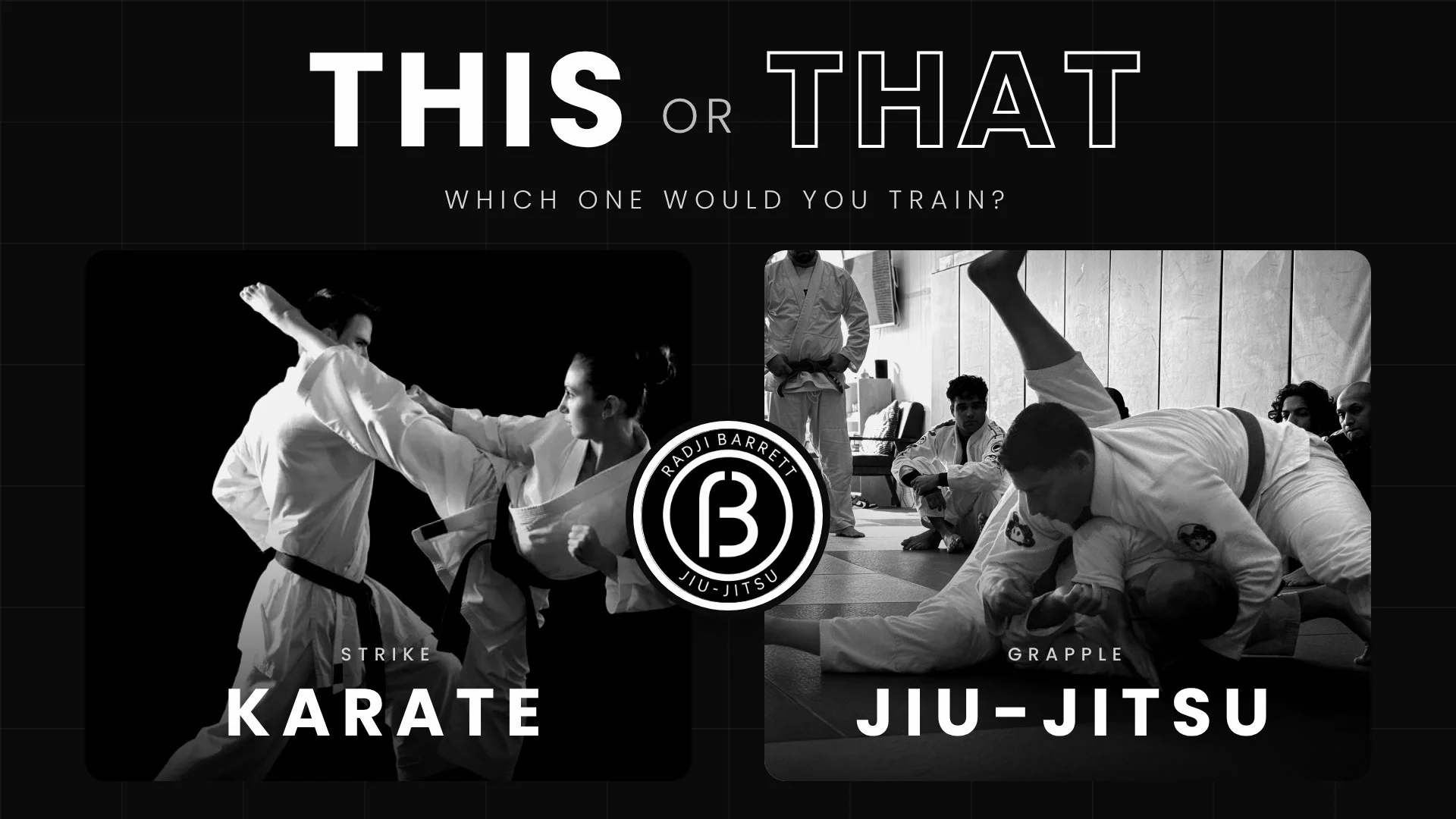
The American Academy of Pediatrics describes the difference plainly: karate focuses mostly on hand strikes, Taekwondo puts greater emphasis on kicks, and judo and jiu-jitsu include grappling. (AAP martial arts guidance)
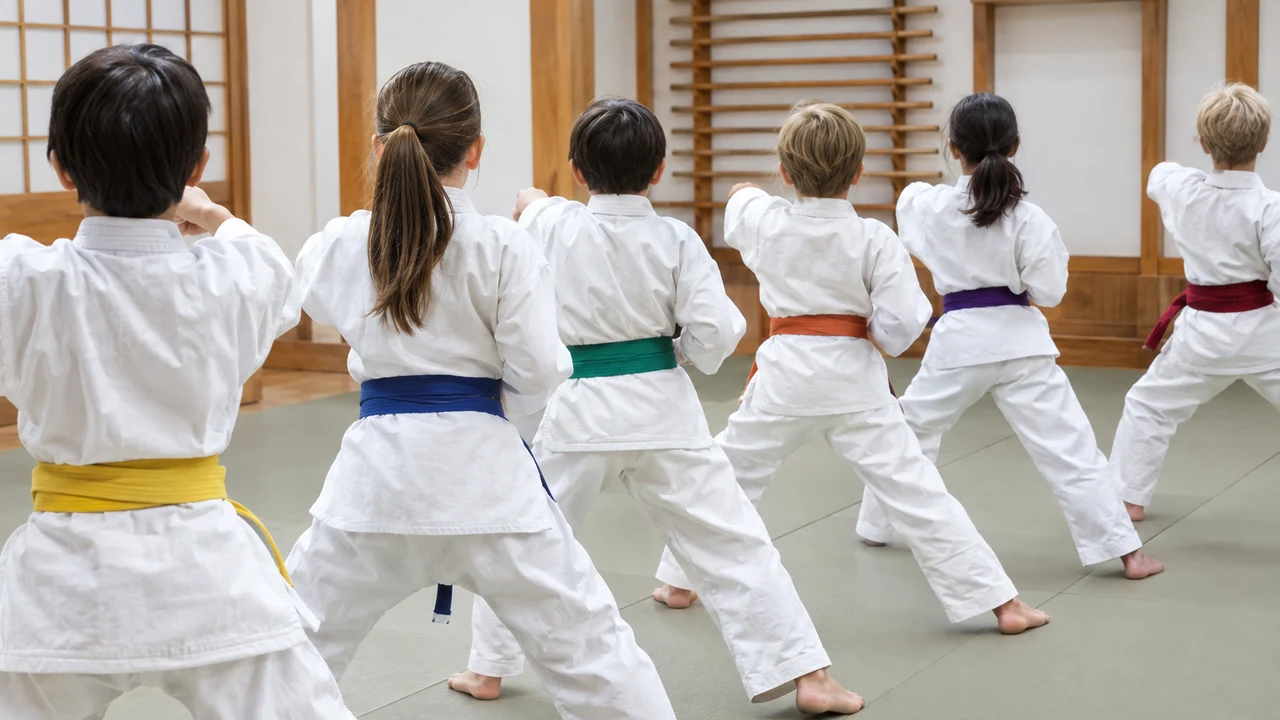
Karate for kids: structure, discipline, striking form
Karate is a Japanese striking art. Kids learn blocks, punches, and stances, and practice them through structured forms called kata, line drills, and belt tests. Classes are often formal and quiet: students bow, line up, and repeat movements with a precision that builds focus and body control.
For a parent, karate's real strengths are structure and measurable progression. A shy child who needs predictability, clear rules, and a visible ladder to climb often thrives in it. The trade-off to understand is that karate's sparring, called kumite, involves striking another child, so most schools hold it back until kids have trained for a while.
Taekwondo for kids: high energy, flexibility, Olympic sport
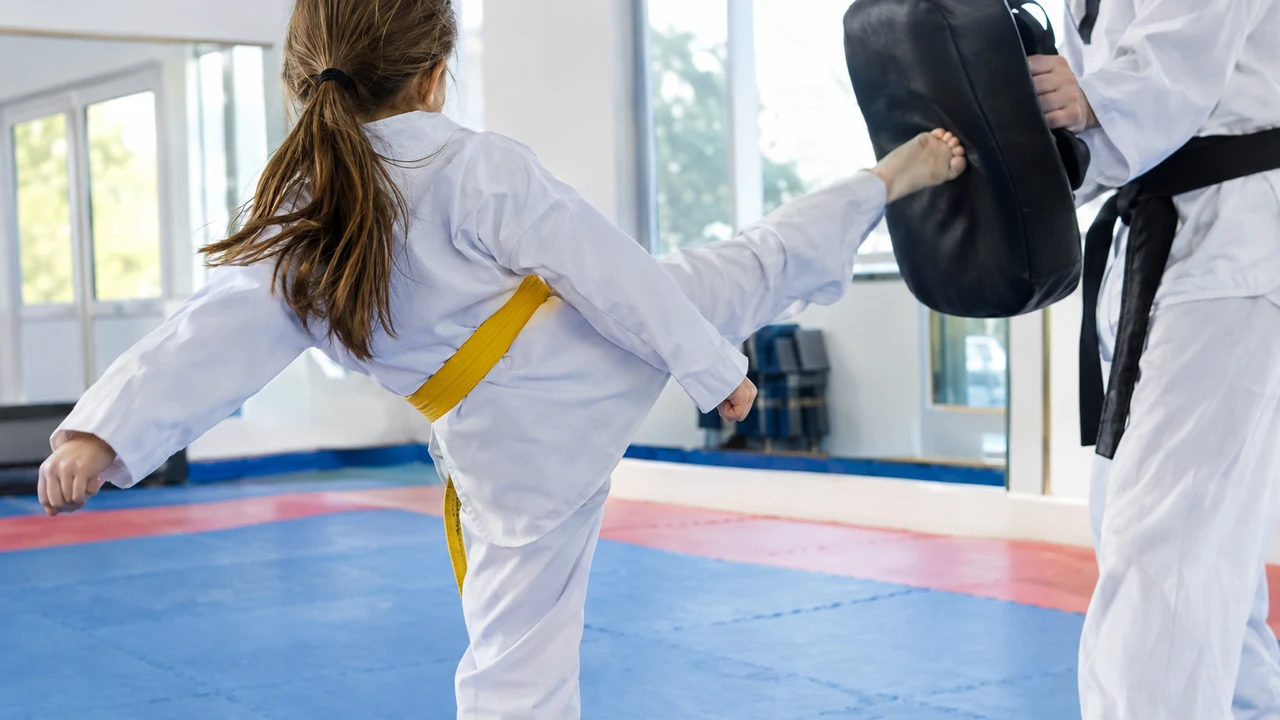
Taekwondo is a Korean striking art with the strongest emphasis on kicking of any mainstream martial art. Classes move fast: jumping, spinning, and high kicks develop flexibility, balance, and serious cardiovascular fitness. Taekwondo is also an Olympic sport, which gives competitive kids a clear path if they want one.
For a parent, Taekwondo suits high-energy kids who love to move. The honest trade-off is contact. Kicking, including to the head in competition formats, is central to the art, and research cited by the AAP has found higher injury rates in Taekwondo than in non-contact karate training. (AAP, AthleteRX martial arts safety overview) Ask any Taekwondo school when kids start sparring and what gear is required; good ones have real answers.
Jiu-jitsu for kids: grappling, leverage, and problem-solving
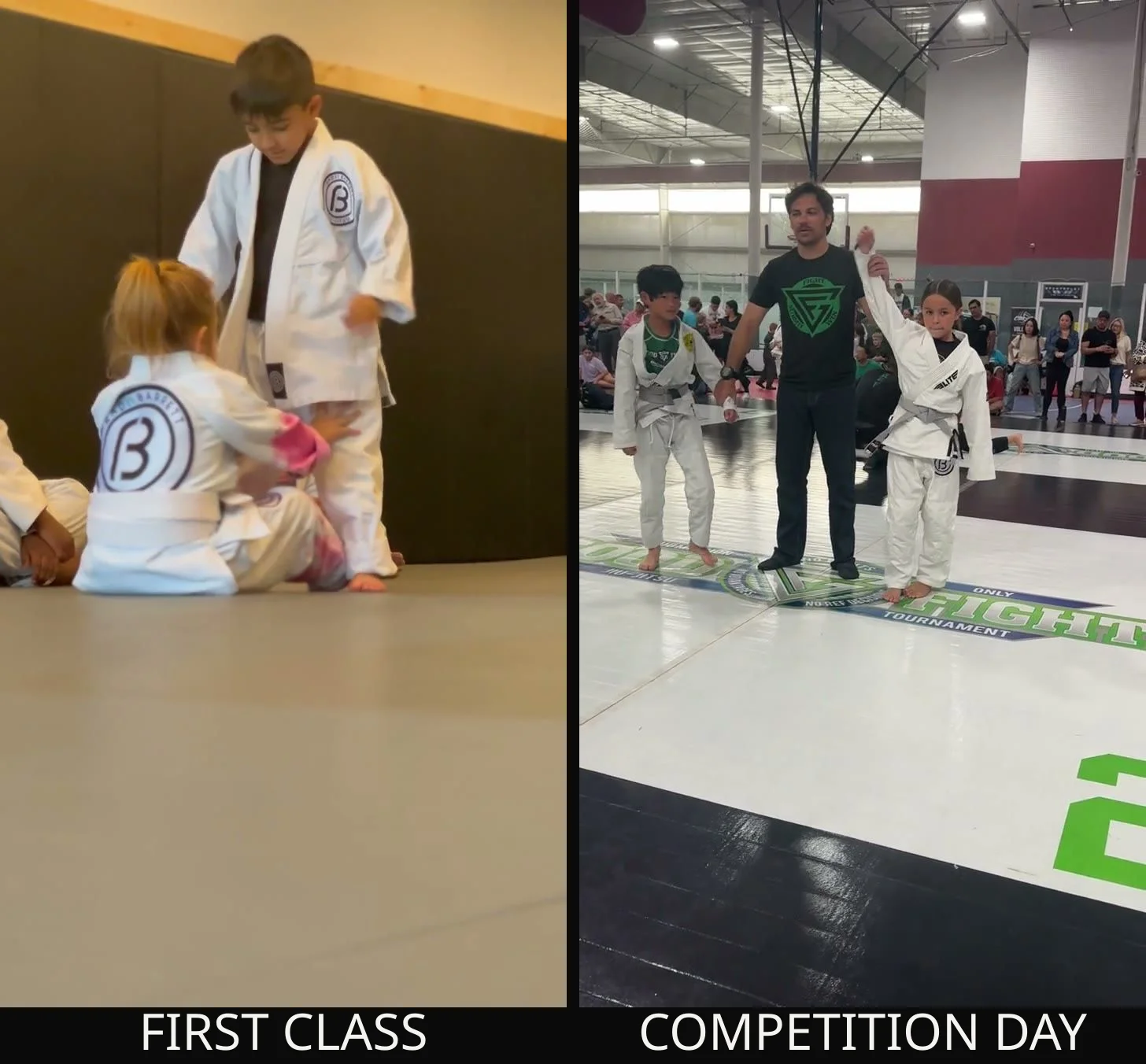
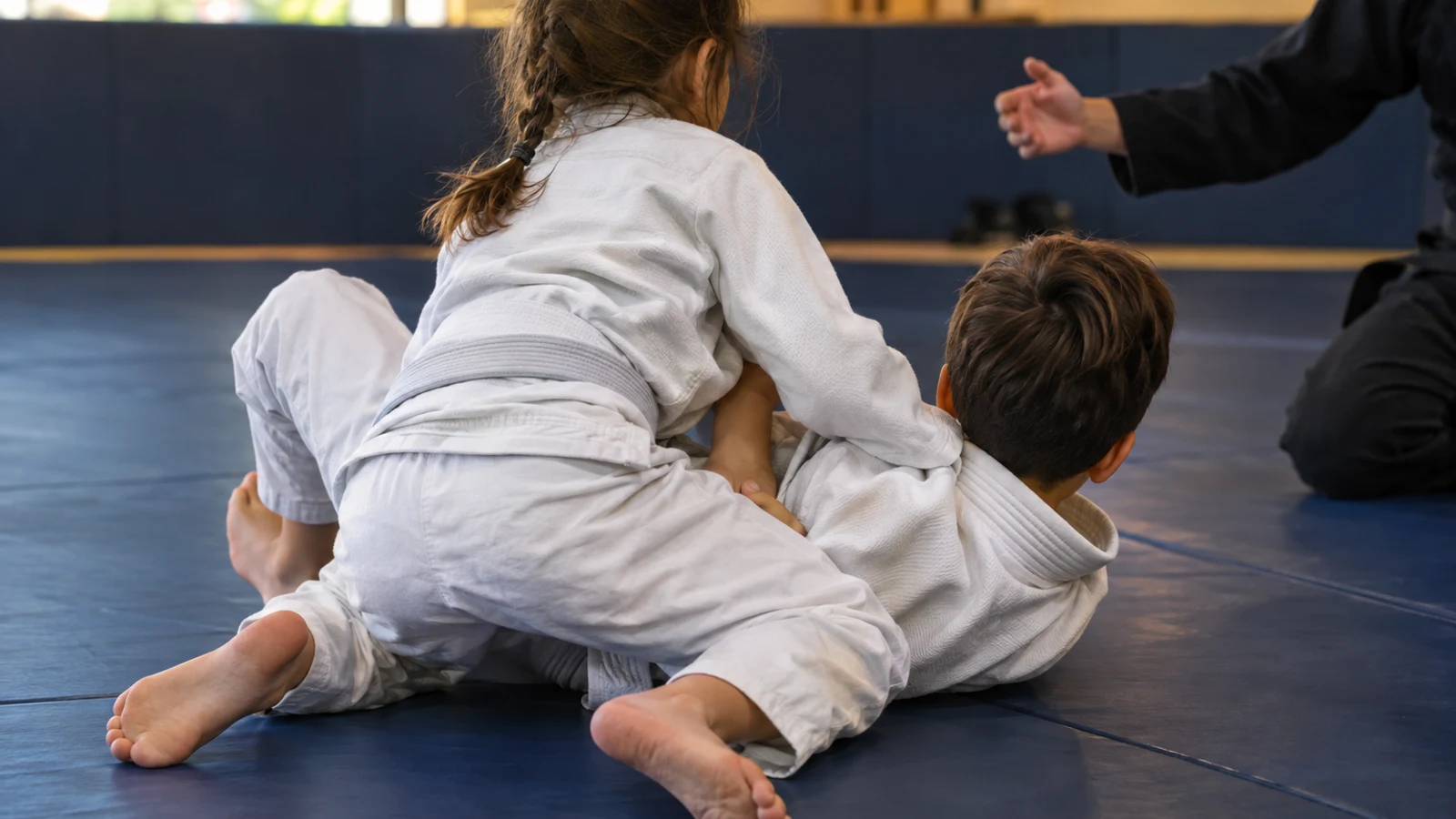
Brazilian jiu-jitsu is a grappling art. Instead of punching and kicking, kids learn takedowns, positional control, escapes, and holds, and they practice all of it against a partner who is actively resisting. There are no strikes to the head in jiu-jitsu training, which many parents find reassuring, and kids learn to fall safely from their very first weeks.
What makes jiu-jitsu different for a child is the problem-solving. Live grappling is often described as physical chess: your child has to stay calm, feel what their partner is doing, and respond with technique rather than panic or strength. Because jiu-jitsu is built on leverage, smaller kids can genuinely control bigger ones, which is why it has a strong reputation for anti-bullying confidence without teaching a child to swing at anyone.
To be fair to the other arts: karate and Taekwondo sparring also involve real partners, and a well-run striking school teaches excellent distance control. The distinction is what your child spends most of class doing. In jiu-jitsu, it is hands-on grappling with a resisting teammate, every class.
What the research actually says about kids and martial arts
You will see big claims on every school's website, so here is what studies support. A 2025 meta-analysis of 16 randomized controlled trials found that martial arts interventions significantly improved children's prosocial behavior and reduced aggressive behavior, with the strongest effects in programs running 12 to 16 weeks with regular weekly sessions. (Adolescent Research Review, Springer)
A widely cited school-based study of 207 elementary students found that a taekwondo group improved more than regular physical education classes on self-regulation, classroom conduct, and prosocial behavior. (review of youth martial arts research, PMC) In other words, the benefits families are looking for, focus, discipline, and confidence, are real and measurable across styles.
Two cautions from the same literature. Reviews of longitudinal studies do not show that martial arts uniformly reduces aggression; outcomes depend heavily on how the program is taught and what the instructor rewards. (Frontiers in Public Health, 2026) And the AAP recommends non-contact skill development before any sparring, with contact delayed until a child shows the maturity to handle it. (AAP) Any school you visit should be able to describe how it sequences those steps.
So which martial art is best for your child?
Here is our honest answer as a jiu-jitsu academy: the best martial art is the one your child will actually attend twice a week for a year. A brilliant program you cannot get to consistently loses to a good one that fits your family's schedule and your child's temperament.
- If your child needs structure and calm: karate's formal, quiet classes build exactly that.
- If your child has energy to burn and loves to move: Taekwondo's kicking and pace are a genuine fit.
- If your child is small for their age, shy, or has been grabbed or pushed around: jiu-jitsu's leverage-based grappling is designed for exactly that situation, and it builds confidence without teaching a child to hit.
- If your child gets bored easily and likes puzzles: jiu-jitsu's problem-solving keeps restless minds engaged.
One caution that applies to every style: the gap between two schools of the same art is usually bigger than the gap between two arts. Visit more than one, watch a class, and pay attention to how the instructor treats the child who is struggling, not the one who is thriving.
Where to find us: Fords, inside Woodbridge Township
Radji Barrett Jiu-Jitsu Academy is at 540 New Brunswick Ave, Fords, NJ 08863. Fords is one of the ten sections of Woodbridge Township, sitting right where New Brunswick Avenue runs between the Edison border and the Perth Amboy line. That puts us a short drive for families searching for kids' martial arts, karate, or Taekwondo classes in:
- Woodbridge Township — we are inside the township, minutes from Avenel, Iselin, Hopelawn, and Keasbey.
- Edison — Fords borders Edison directly, and New Brunswick Avenue crosses the township line. Our academy was previously located in Edison before moving to Fords.
- Metuchen — a straight run down Route 27 and New Brunswick Avenue from the borough.
- Perth Amboy — New Brunswick Avenue leads from the city straight into Fords.
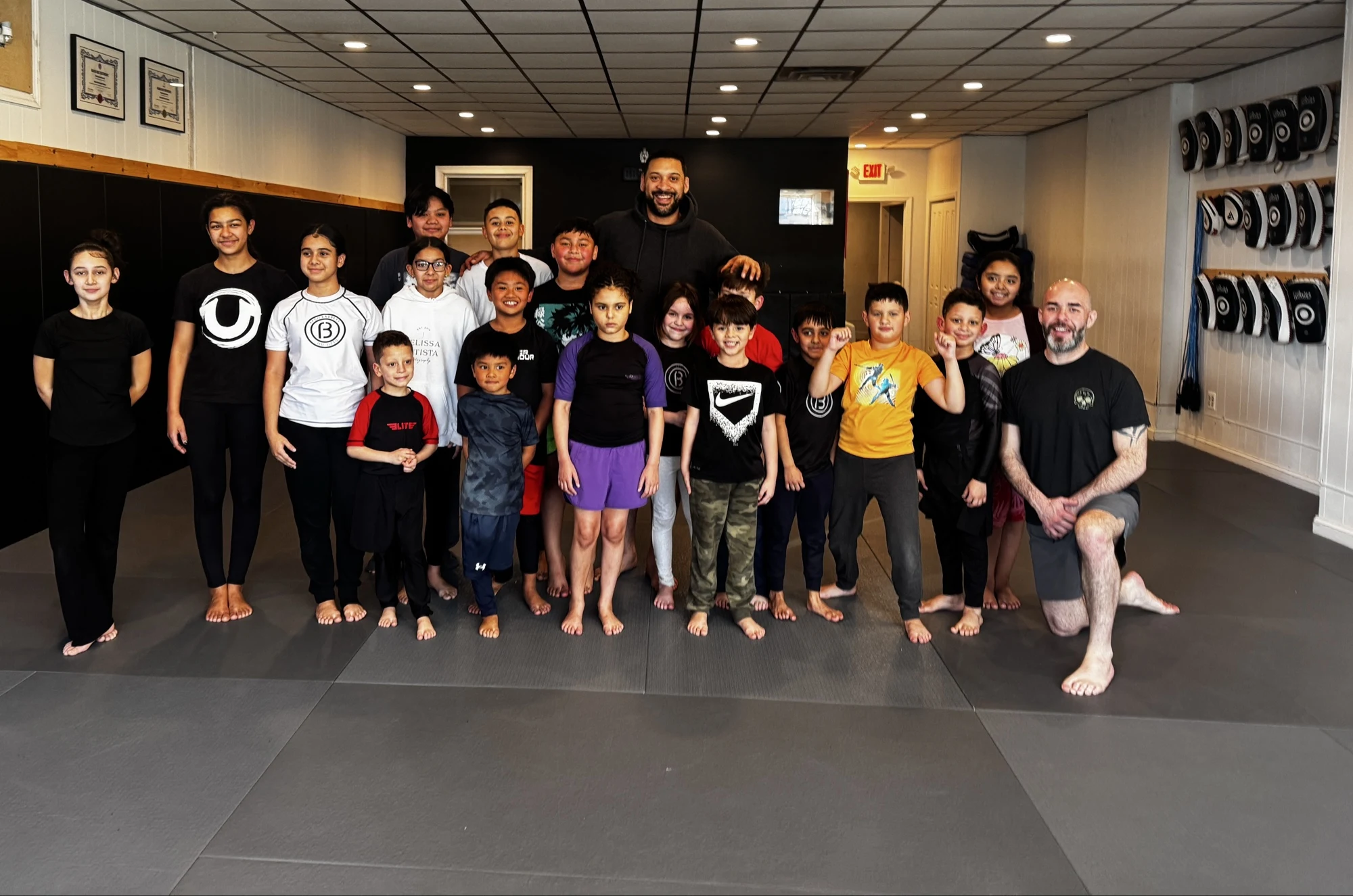
Our kids' program offers a free trial class, with groups of roughly ages 5-9 and 9-13+ and a schedule built for working Middlesex County families. Whether you end up on our mats or at the karate school down the road, we would rather you choose with a clear understanding of what each art trains.
See the difference for yourself
Reading about grappling and experiencing it are different things. Bring your child to a free trial class on New Brunswick Avenue in Fords. They will learn how to fall safely, practice their first technique with a partner, and you can watch every minute of it from the side of the mat.
Radji Barrett Jiu-Jitsu Academy is an independent academy in Fords, NJ, inside Woodbridge Township. We teach Brazilian jiu-jitsu and respect the traditions of every martial art. This article is educational and reflects our experience as a jiu-jitsu academy; it is not a claim that any one art is right for every child.
Parent Questions
What is the best martial art for kids?
There is no single best martial art for every child. Karate builds structured striking, discipline, and focus; Taekwondo builds fast, athletic kicking and flexibility; jiu-jitsu builds grappling, balance, and problem-solving against a resisting partner. The best choice is the art your child enjoys enough to attend consistently, taught by instructors who work well with their age and temperament.
Is jiu-jitsu better than karate for self-defense?
They train different skills. Karate and Taekwondo practice striking at a distance; jiu-jitsu trains close contact, holds, escapes, and ground positions at full effort every class. Because kids' confrontations often involve grabbing rather than clean punching exchanges, many parents choose jiu-jitsu for practical self-defense. The honest answer is that the instructor and the school matter as much as the style.
Is jiu-jitsu safe for young children?
No contact activity is risk-free. The American Academy of Pediatrics recommends focusing on non-contact skill development before any sparring, and evaluating each child's maturity before contact practice. Our kids' classes group children by age, size, and experience, teach falling and control early, and supervise every partner drill. Discuss any health concerns with your pediatrician before starting.
What age can my child start martial arts?
Most children are ready for structured martial arts classes between ages 4 and 6, when they can follow group instructions. Our kids' program uses approximate groups of ages 5-9 and 9-13+, with flexibility around size, maturity, and experience. A free trial class is the easiest way to see whether your child is ready.
Will martial arts make my child more aggressive?
Research reviews of martial arts programs for children do not show a uniform effect on aggression; outcomes depend heavily on how the program is taught. What matters is what the instructor rewards: control, respect, and using skills appropriately. Ask how a school handles a child who misuses a technique, and watch whether discipline or dominance is being taught.
Do you serve families outside Fords?
Yes. Our academy is at 540 New Brunswick Ave, Fords, NJ 08863, inside Woodbridge Township, and our kids' trial class is free. Families join us from Woodbridge, Edison, Metuchen, Perth Amboy, Iselin, Avenel, Colonia, and neighboring Middlesex County communities.
Ready to Start Training?
Book your free first class at our academy in Fords, NJ. No experience needed.